
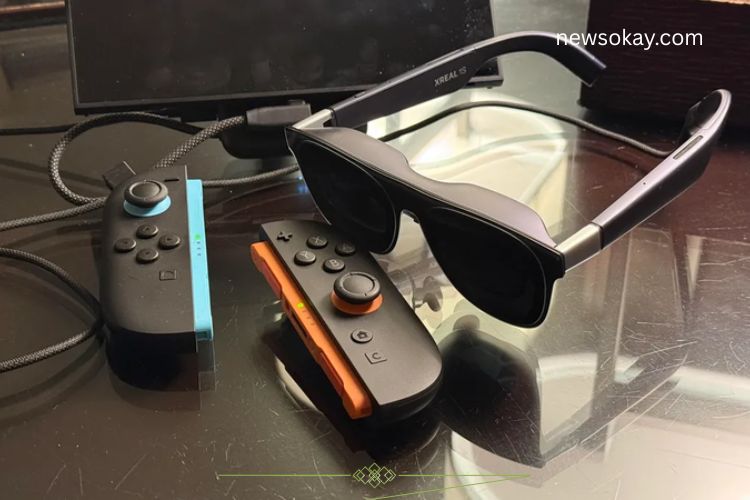
Smart glasses are evolving faster than ever, and the latest innovations are transforming both entertainment and productivity. Last year, the Xreal One impressed many with its sharp displays and versatile adjustments, including the ability to pin screens in place. This year, Xreal takes it further with the Xreal 1S, offering enhanced gaming features, higher resolution, and seamless connectivity with the Nintendo Switch 2, thanks to the new $100 Neo mini-dock.
Read More: Plaud Unveils Revolutionary AI Pin and Game-Changing Desktop Meeting Notetaker
Upgrading the Xreal Experience
Priced at $450, the Xreal 1S delivers more value than even the more expensive Xreal One Pro. While the Pro features a flatter lens design that reduces glare, the 1S focuses on a richer gaming experience. Both models use “birdbath” micro-OLED displays that project vivid images into your eyes via half-mirrored prisms, but the 1S takes things up a notch with a 52-degree field of view, 700 nits of brightness, and a 16:10 resolution of 1,200 pixels. This setup not only improves clarity over the Pro’s 1080p screen but also aligns perfectly with modern gaming display ratios.
Adding to the convenience, the 1S works with prescription lens inserts from the Xreal One, ensuring clear visuals for all users. Xreal also introduced new processing features, including automatic 3D media conversion. While still in beta, this mode allows Steam Deck, Switch, or even mobile content to appear in 3D. Frame rates may drop slightly, and conversion isn’t perfect, but the potential for immersive 3D experiences is exciting.
Xreal Neo Mini-Dock: Gaming Anywhere
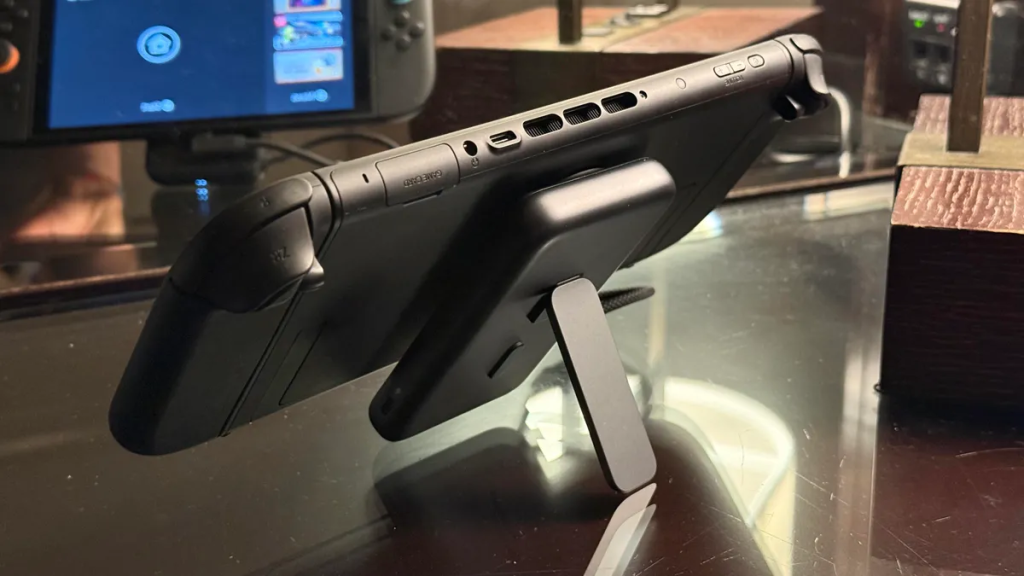
The Xreal Neo mini-dock is a compact powerhouse designed to connect Xreal glasses with the Nintendo Switch. This $100 accessory combines portability with functionality, allowing users to enjoy Switch games in a micro-OLED, personal theater experience. Unlike laptops, phones, or handheld PCs, the Switch doesn’t natively support display glasses—but Xreal’s workaround handles this beautifully.
The Neo dock includes a 10,000-mAh battery, a built-in USB-C pass-through for video and charging, a magnetic backplate, and a kickstand. While it doesn’t support contactless charging, the dock’s design makes it highly portable, snapping onto your Switch in kickstand mode for a stable connection.
Compared to alternatives like Viture’s battery dock, the Neo is smaller and more practical for everyday use. Viture allows dual-glasses connections but is nearly twice as large. Xreal’s dock may require minor setup adjustments—like detaching Joy-Con controllers—but once connected, it offers a surprisingly immersive experience.
Immersive Gaming With Xreal 1S
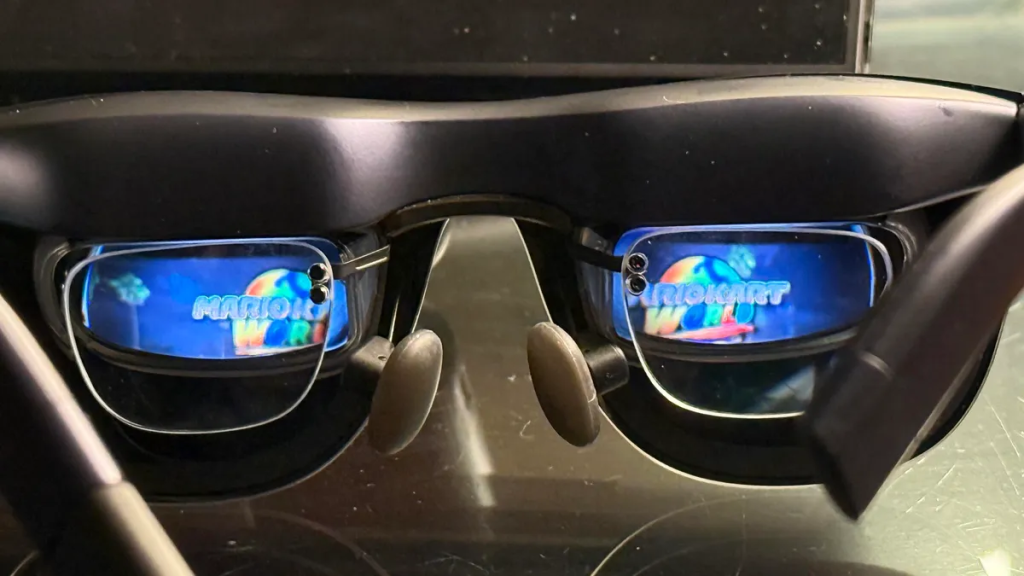
Gaming on the Switch 2 with the Xreal 1S and Neo dock is a revelation. Games like Mario Kart World, Donkey Kong Bonanza, and Kirby Air Riders come alive on the glasses’ micro-OLED screens, creating a personal mini-theater anywhere. The visual clarity, vibrant colors, and wide field of view make handheld gaming feel cinematic.
However, not all games run flawlessly. Titles like Metroid Prime 4 can slow down, making gameplay difficult. The dock occasionally prompts firmware updates that don’t work with the Switch 2, highlighting that while Xreal’s solution is impressive, it isn’t a perfect fit yet.
Despite these minor challenges, the experience demonstrates the potential of combining high-quality smart glasses with portable docks. For gamers who want a portable, immersive experience, this setup opens exciting new possibilities.
Design and Build: Sleek, Portable, and Practical
The Xreal 1S maintains the sleek, lightweight design of its predecessor, ensuring comfort for extended wear. Its slightly larger displays and improved brightness make content easier to view, while the 16:10 resolution supports wide-screen gaming without stretching or cropping visuals.
The Neo dock complements this design with a minimalist, compact build that’s easy to carry. Its magnetic connection system, kickstand, and high-capacity battery make it versatile for both travel and home use. Whether gaming on a plane, at a café, or in your living room, the setup remains practical.
Why Xreal 1S Outshines the One Pro
While the Xreal One Pro still offers excellent performance, the 1S edges ahead in several key areas:
- Higher resolution and brighter display for sharper visuals
- Wider field of view that enhances immersion
- Optimized 16:10 aspect ratio for gaming
- Seamless compatibility with the Neo dock and Switch 2
The only area where the Pro still holds an advantage is lens comfort. However, Xreal is likely to update the Pro with the 1S’s new display technology, making it a strong contender in the near future.
Challenges and Considerations
Setting up the Neo dock with the Switch 2 can be slightly cumbersome due to Nintendo’s USB-C limitations. The bottom port is required for video output, and the dock’s magnetic sticker helps maintain alignment. Users must also detach Joy-Con controllers for docked mode, which may be inconvenient for some.
Additionally, 3D conversion via the 1S is still in beta. While the effect works for many games and media, it can reduce frame rates and occasionally feel imprecise. These minor issues are outweighed by the overall experience but are worth noting for early adopters.
The Future of Gaming With Smart Glasses
Xreal 1S and Neo demonstrate that portable, high-quality immersive gaming is now possible. The combination of advanced micro-OLED displays, compact docks, and mobile-friendly design opens new horizons for gamers who want flexibility and immersion without being tied to a traditional console or TV.
As more games and systems potentially adopt native support for smart glasses, the experience will only improve. Nintendo and other console makers could learn from these innovations, paving the way for official glasses support in future devices.
Frequently Asked Questions:
What’s new with the Xreal 1S glasses?
The Xreal 1S features brighter, higher-resolution micro-OLED displays, a slightly larger 52-degree field of view, and a 16:10 aspect ratio optimized for gaming. It also supports prescription lens inserts and improved 3D media conversion.
How much do the Xreal 1S glasses cost?
The Xreal 1S is priced at $450, making it more affordable than the Xreal One Pro while offering better display performance.
How does the Neo mini-dock work?
The $100 Neo dock acts as a passthrough for the Nintendo Switch 2 and other devices. It includes a 10,000-mAh battery, a USB-C video pass-through, a magnetic connection system, and a kickstand for easy setup.
Can I use the Xreal 1S with my Nintendo Switch 2?
Yes. The Neo mini-dock allows the Switch 2 to connect with Xreal glasses for an immersive gaming experience. Some setup steps are required, like detaching Joy-Con controllers in docked mode.
Does the 3D conversion work perfectly?
The 3D conversion feature is still in beta. While it creates impressive 3D visuals for games, movies, and mobile screens, it may reduce frame rates and isn’t always precise.
How does the Xreal 1S compare to the Xreal One Pro?
The 1S offers better resolution, brighter displays, and a wider field of view, making it ideal for gaming. The One Pro still has slightly more comfortable lenses, but Xreal may update it with the 1S display technology soon.
Is the Neo dock portable?
Yes. The dock is compact, easy to carry, and functions as both a battery pack and a video passthrough device. It’s smaller than competitors like Viture’s dock, making it convenient for travel.
Conclusion
Xreal’s 1S glasses, combined with the Neo mini-dock, mark a significant step forward in smart display technology and portable gaming. With brighter, higher-resolution screens, a wider field of view, and seamless Nintendo Switch 2 compatibility, they deliver an immersive, personal theater experience anywhere. While setup can take a few steps and some features are still in beta, the overall performance and versatility make the 1S a compelling choice for gamers, tech enthusiasts, and early adopters alike. By blending sleek design, advanced display technology, and portable convenience, Xreal shows how smart glasses can transform gaming and media consumption.