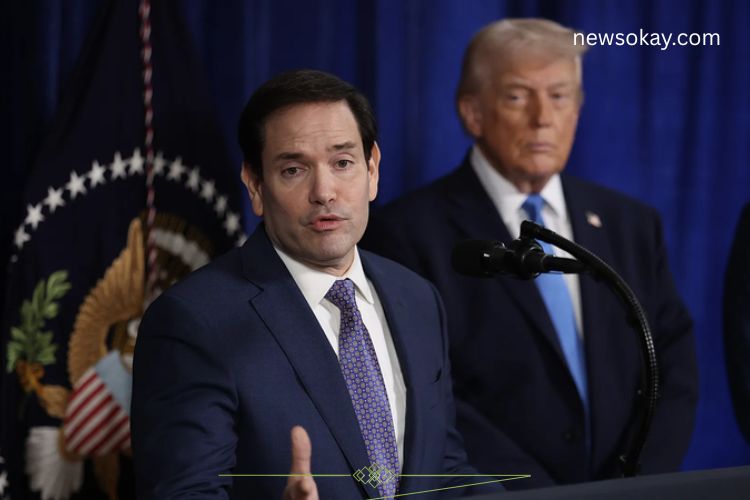
In a dramatic turn of events in early 2026, U.S. Secretary of State Marco Rubio has found himself at the center of one of the most consequential foreign policy developments of his 28‑year political career. After playing a key role in the operation that removed Venezuelan President Nicolás Maduro from power, Rubio now faces the complex task of steering U.S. policy in a country rich in oil, plagued by instability, and pivotal for global geopolitics.
This moment represents a significant shift in how the United States projects power in the Western Hemisphere, with major implications for global stability, relations with China and other major powers, and the future of democratic governance in Venezuela.
Read More: PYPL Stock Surge or Slump? Bold Price Forecast from September 2025 to 2030
The Maduro Operation: A Bold U.S. Move
In early January 2026, U.S. forces conducted a coordinated operation in Venezuela’s capital, leading to Maduro’s capture. He was swiftly removed from the country, leaving the nation in a critical transitional phase. The operation was framed as a strategic victory, but it also presented immediate challenges: maintaining order, ensuring a stable government transition, and avoiding a humanitarian crisis.
President Trump emphasized that the U.S. would take charge temporarily to stabilize the country and direct the transition process. Rubio, as a key architect of the operation, now shoulders the responsibility of translating that strategic vision into practical action.
Rubio’s Rising Stakes: From Architect to Manager
Rubio’s career has long focused on Latin America, with an emphasis on countering authoritarian regimes. However, his current role goes beyond advocacy: he must actively manage a volatile country emerging from decades of authoritarian rule. This requires balancing immediate stabilization efforts with long-term political and economic reforms.
Rubio has stressed that the United States now holds significant leverage over Venezuela through control of oil resources and influence over governance. His goal is to prevent corruption, support recovery, and foster democratic transition while ensuring the country does not descend into chaos.
Oil, Power, and Global Strategic Competition
Venezuela holds the largest proven oil reserves in the world, making its future a strategic priority for the United States. The U.S. plans to increase production and stabilize supply to global markets, using oil as a tool for economic leverage and geopolitical influence.
Control over Venezuelan oil allows the United States to strengthen energy security, support allied nations, and counter the influence of China, Russia, and other countries that have historically had strong ties to Caracas. However, Rubio must balance economic objectives with the broader need for political stability and democratic governance.
Internal Power Struggles in Venezuela
Maduro’s removal has left Venezuela’s political landscape in flux. Interim leadership is struggling to consolidate power, while opposition figures are calling for free elections and comprehensive democratic reforms. This tension creates a delicate environment where any misstep could spark violence, civil unrest, or renewed political instability.
Rubio’s challenge is to support democratic institutions without imposing a system that could provoke backlash. Maintaining legitimacy in the eyes of the Venezuelan people is as important as managing the transitional government.
Regional and Global Reactions
The U.S. intervention in Venezuela has sparked a range of reactions worldwide. Some view it as a necessary step to restore stability, while others see it as a potential overreach with dangerous implications for international law. Allies remain cautiously supportive, particularly given the country’s critical role in global energy markets, but adversaries are likely to respond with increased political and economic pressure.
Rubio must navigate these international dynamics carefully. A misstep could weaken U.S. alliances, embolden adversaries, and undermine the broader goals of stabilization and democratization.
Challenges Ahead: Democracy, Security, and Reconstruction
As Rubio works to shape Venezuela’s future, he faces four major challenges:
Restoring Democratic Processes
Creating a sustainable democratic system requires credible elections, inclusive governance, and accountability for past abuses. Rubio’s team must support local institutions while ensuring that the transition remains transparent and fair.
Rebuilding the Economy
Venezuela’s economy is devastated after years of mismanagement and sanctions. Revitalizing oil production is critical, but long-term recovery depends on economic diversification, legal reform, and institutional rebuilding.
Ensuring Security and Stability
Power vacuums often lead to violence, crime, and unrest. Rubio must coordinate security reforms, combat organized crime, and create mechanisms for law enforcement while ensuring that local communities maintain trust in transitional authorities.
Maintaining International Credibility
The U.S. must balance strategic objectives with global norms to maintain credibility. Actions taken in Venezuela will be closely watched, and any perceived overreach could damage America’s influence and invite international criticism.
A Pivotal Moment for Rubio and U.S. Foreign Policy
Marco Rubio’s role in Venezuela represents a watershed moment in both his career and U.S. foreign policy. How the situation unfolds will affect regional politics, global energy markets, and America’s strategic position in the hemisphere for years to come.
Success requires Rubio to navigate complex political, economic, and security challenges, ensuring that Venezuela transitions toward stability and democracy without provoking further conflict. His leadership now will be remembered either as a bold application of influence or a cautionary tale of foreign intervention gone wrong.
Rubio’s ability to balance strategic interests with humanitarian and democratic priorities will define not only Venezuela’s future but also the credibility and effectiveness of U.S. foreign policy in Latin America. This is the defining moment of his political life — a challenge that tests both vision and execution on an unprecedented scale.
Frequently Asked Questions:
What happened in Venezuela that made this a “pivotal triumph” for Marco Rubio?
In early January 2026, U.S. forces carried out a strike in Venezuela that resulted in the capture of President Nicolás Maduro. This surprise operation marked a dramatic shift in U.S. involvement in Venezuelan affairs and placed Secretary of State Marco Rubio at the center of the resulting political challenge. The mission was framed as targeting corruption, drug trafficking networks, and destabilizing foreign influence, while aiming to open a new chapter for Venezuela’s future.
Why is Marco Rubio’s role in Venezuela considered a “high‑stakes” moment in his career?
Rubio has spent decades focused on Latin American politics. The Venezuela operation thrust him into the most consequential foreign policy crisis of his career, giving him unprecedented influence over U.S. strategy in a nation with the world’s largest oil reserves. Steering policy now involves balancing diplomacy, economic leverage, and international norms — making it one of the most complex challenges of his public life.
Is the United States governing Venezuela now?
No. While former President Trump at one point suggested the U.S. might “run” Venezuela during a transitional period, senior U.S. officials including Rubio clarified that the goal is not direct governance. Instead, the U.S. is applying strategic pressure — particularly through control of Venezuela’s sanctioned oil — to influence outcomes and support a stable transition without occupying the country.
Why is oil such a central piece of the U.S. strategy?
Venezuela holds the largest proven oil reserves in the world. By controlling access to sanctioned oil exports and seizing certain tankers, the U.S. gains economic leverage. Proceeds from oil sales are intended to support Venezuela’s stabilization rather than corrupt elites. This leverage also strengthens U.S. influence in global energy markets and helps counter the sway of rival powers such as China and Russia.
How have other countries reacted to the U.S. role in Venezuela?
Reactions are mixed. Many allied governments express concern about international norms and legality. Other countries see opportunities to engage diplomatically or expand influence. Adversarial states like China and Russia — which had close ties with the Maduro government — are watching closely and may counterbalance U.S. influence.
What is Rubio’s broader foreign policy vision beyond Venezuela?
Rubio has long emphasized countering authoritarian influence in the Western Hemisphere, particularly from countries like Cuba, Iran‑linked networks, and other adversarial actors. His Venezuela strategy ties into a larger aim to reduce hostile foreign presence in Latin America and secure economic and political stability that aligns with U.S. interests.
Will Venezuela have free elections soon?
U.S. officials including Rubio say that establishing a stable and inclusive political process is a priority, but they also stress that meaningful elections require initial stabilization and economic recovery. The timeline remains uncertain, and much depends on how interim leadership and internal political forces respond.
Conclusion
Marco Rubio’s role in Venezuela represents a defining moment in both his political career and U.S. foreign policy. The capture of Nicolás Maduro has created an unprecedented opportunity to influence a nation with vast resources and strategic importance, but it also comes with immense risks. Rubio must navigate a delicate balance between stabilization, democratic transition, and economic recovery, all while managing global scrutiny and regional pressures. This moment highlights the high stakes of international leadership, where decisive action meets complex consequences.