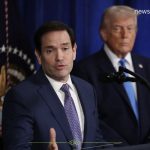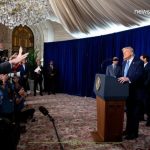
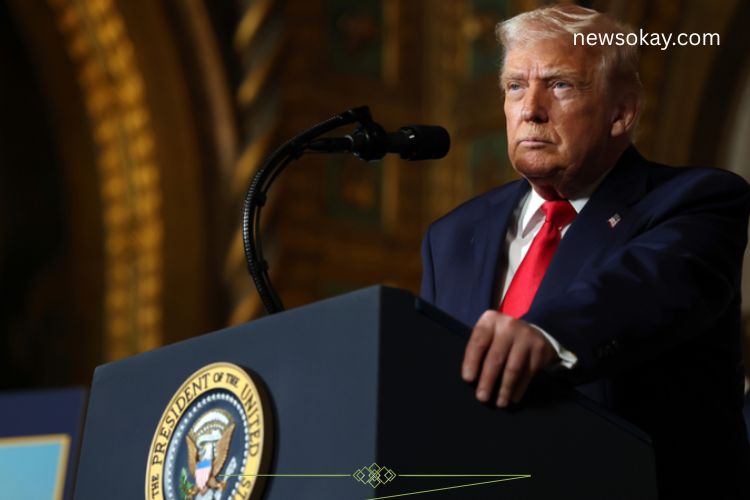
U.S. President Donald Trump has raised the possibility of a second military strike on Venezuela following the capture of President Nicolas Maduro. Speaking to reporters aboard Air Force One on January 4, 2026, Trump suggested that additional U.S. interventions could occur if remaining members of the Maduro administration fail to cooperate in “fixing” the country.
Trump’s statements hinted at broader regional implications, including potential actions in Colombia and Mexico to curb drug trafficking into the United States. “Operation Colombia sounds good to me,” he remarked, emphasizing the administration’s focus on halting illicit drug flows. He also noted that Cuba, a longstanding ally of Venezuela, might resolve its own issues without direct U.S. military involvement.
Maduro in U.S. Custody
Maduro, currently held in a New York detention facility, is scheduled for a court appearance on Monday to face drug-related charges. His capture has created significant uncertainty for Venezuela, a nation rich in oil reserves yet politically unstable.
Trump indicated that his administration would collaborate with the remaining members of Maduro’s regime to curb drug trafficking and revamp the country’s oil industry, rather than immediately pushing for elections or regime change.
Venezuelan Leadership Responds
Despite Maduro’s detention, key officials in his government maintain control. They describe the capture of Maduro and his wife, Cilia Flores, as a kidnapping. Interior Minister Diosdado Cabello reiterated Maduro’s legitimacy, stating in an audio message, “Here there is only one president, whose name is Nicolas Maduro Moros. Let no one fall for the enemy’s provocations.”
The operation, which stunned Venezuelans with images of a blindfolded and handcuffed Maduro, represents the U.S.’s most controversial intervention in Latin America since the invasion of Panama in 1989. Defense Minister General Vladimir Padrino reported on state television that soldiers, civilians, and much of Maduro’s security detail were killed in the raid, calling it an act committed “in cold blood.”
The Cuban government confirmed that 32 of its citizens were killed during the U.S. strike. Vice President Delcy Rodriguez, who also serves as oil minister, assumed interim leadership with the endorsement of Venezuela’s top court. While Trump claimed Rodriguez would cooperate with the United States, she has publicly contradicted this assertion. Trump warned she could face consequences if she “doesn’t do what’s right,” intensifying the pressure on Venezuela’s remaining leaders.
U.S. Interests and Oil Access
The Trump administration portrays Maduro’s capture as a law enforcement action aimed at bringing him to justice for narcotics-related charges filed in 2020, including narco-terrorism conspiracy. Maduro has denied any wrongdoing.
Trump also emphasized U.S. oil interests, noting the need for American companies to access Venezuela’s vast oil reserves. He suggested that the mass migration of Venezuelans to the U.S., including criminals and drug addicts, was another factor influencing the decision to capture Maduro.
Venezuelan officials, including Cabello, criticized the operation as a direct attempt to seize the nation’s natural resources. “We are outraged because in the end everything was revealed — it was revealed that they only want our oil,” Cabello stated.
Economic Crisis and Public Sentiment
Once one of Latin America’s wealthiest nations, Venezuela’s economy declined sharply under President Hugo Chavez and worsened under Maduro. This economic collapse triggered one of the world’s largest migrations, with roughly 20% of Venezuelans living abroad.
U.S. Secretary of State Marco Rubio emphasized that Venezuela’s next leadership must prevent adversaries from controlling the nation’s oil and must address ongoing drug trafficking. Rubio noted that until Venezuela meets these conditions, its economy would remain constrained, citing the ongoing U.S. blockade on Venezuelan tankers.
Life in Caracas Amid Uncertainty
Despite political turmoil, daily life continues cautiously in Caracas. Some Maduro supporters organized government-sanctioned protests, while bakeries and coffee shops remained open. Citizens stocked up on essentials as a precaution, and some ventured outdoors despite lingering fear.
Reinaldo Mijares, a protester, asserted, “The people must not surrender, nor should we ever become a colony of anyone again. This country is not a country of the defeated.” Meanwhile, opposition groups remain cautious, with limited celebrations over Maduro’s detention.
A single mother in Maracaibo reflected the public’s cautious mindset, saying, “Yesterday I was very afraid to go out, but today I had to. This situation caught me without food, and I need to figure things out. Venezuelans are used to enduring fear.”
Opposition and Leadership Prospects
Trump has downplayed the likelihood of opposition leader Maria Corina Machado assuming power, citing her lack of broad support. Machado, 58, was barred from running in the 2024 election, though she asserts that her ally, Edmundo Gonzalez, holds a democratic mandate following the vote.
The U.S. approach appears focused on stabilizing Venezuela’s oil industry and curbing illicit activities rather than immediately supporting opposition leadership. This strategy reflects broader priorities, including protecting U.S. interests and ensuring regional security.
Regional Implications
Trump’s statements signal that U.S. interventions could extend beyond Venezuela, especially if neighboring nations fail to curb drug trafficking. Colombia and Mexico may face pressure to cooperate with U.S. policies or risk consequences.
The unfolding events underscore heightened tensions in Latin America, where U.S. military actions and sanctions directly influence political and economic stability. The capture of Maduro and ongoing U.S. involvement may reshape alliances, energy markets, and migration patterns in the region.
Frequently Asked Questions:
What did President Trump say about a second strike on Venezuela?
President Trump indicated that the United States could launch a second military strike on Venezuela if officials there do not cooperate with efforts to stabilize the country after President Nicolás Maduro’s capture. His comments suggest further military pressure may follow.
Why is the U.S. threatening a second strike?
The U.S. is demanding cooperation from Venezuelan authorities to curb drug trafficking and reform the country’s leadership and oil sector. Failure to comply could prompt additional military action.
What triggered the possibility of U.S. military action?
The U.S. carried out a large-scale strike that resulted in Maduro’s capture. Trump emphasized that cooperation from remaining government officials is necessary to prevent further intervention.
Has Maduro been charged or detained?
Yes. Maduro is in U.S. custody facing federal drug-related charges. His detention has created uncertainty regarding Venezuela’s political future.
Are other countries mentioned as potential targets?
Trump also suggested that Colombia and Mexico could face increased pressure if they do not help reduce the flow of drugs into the United States.
What is the Venezuelan government saying about the strike?
Venezuelan officials condemned the U.S. operation, calling the capture of Maduro and his wife a kidnapping, and reaffirmed Maduro as the legitimate president.
How are Venezuelans reacting on the ground?
Some Maduro supporters organized protests, while daily life continues cautiously. Citizens remain vigilant, with many stocking up on essentials and navigating a tense atmosphere.
Conclusion
The situation in Venezuela remains highly volatile after the capture of President Nicolás Maduro. President Trump’s warning of a potential second strike underscores the high stakes for regional stability, U.S. interests, and Venezuela’s future. With interim leadership under Delcy Rodriguez and widespread uncertainty on the ground, the country faces a critical period of political, economic, and social challenges. How Venezuelan authorities respond to U.S. demands will shape the nation’s trajectory, while the international community continues to watch closely. The coming weeks may define not only Venezuela’s future but also the broader balance of power in Latin America.