
- Nvidia’s Bold Move in the AI Hardware Market
- The Talent Acquisition: Why Key Leaders Matter
- Groq’s Rapid Growth and Market Impact
- The Rise of LPUs: A New Era for AI Processing
- Strategic Implications for the AI Industry
- The Future of AI Hardware Innovation
- Frequently Asked Questions:
- What is the deal between Nvidia and Groq about?
- Is Nvidia acquiring Groq completely?
- What makes Groq’s AI chips special?
- Who are the key executives joining Nvidia from Groq?
- How does this deal impact Nvidia’s position in the AI market?
- How has Groq grown in recent years?
- What are LPUs and why are they important for AI?
- Conclusion
In a move that is set to reshape the AI hardware landscape, Nvidia has entered a non-exclusive licensing agreement with AI chip competitor Groq. This deal is not just about technology—it also brings key talent from Groq, including founder and CEO Jonathan Ross and president Sunny Madra, under Nvidia’s wing.
While some reports have suggested that Nvidia is acquiring Groq’s assets for as much as $20 billion, the company clarified that this is not a full acquisition. However, if these figures are accurate, this deal would rank among Nvidia’s largest ever investments, positioning the company to strengthen its dominance in the AI chip sector.
Read More: https://newsokay.com/metas-controversial-ai-ad-policy/
Nvidia’s Bold Move in the AI Hardware Market
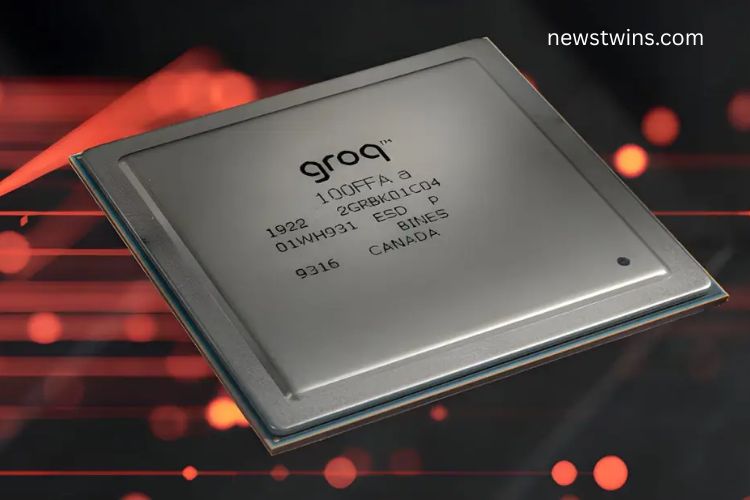
The race to advance AI capabilities has made computing power a critical commodity for technology companies. Nvidia’s GPUs (graphics processing units) have already become the industry standard for AI processing, powering a wide range of AI applications across multiple sectors. With the Groq partnership, Nvidia gains access to a unique class of hardware called LPUs, or language processing units, which promise groundbreaking efficiency for running large language models (LLMs).
Groq claims that its LPUs can execute LLMs up to ten times faster than traditional GPUs while consuming only one-tenth of the energy. This efficiency could dramatically reduce the cost and speed barriers that AI developers face, giving Nvidia a competitive advantage as AI applications scale globally.
The Talent Acquisition: Why Key Leaders Matter
Hiring Groq’s top executives is just as important as licensing its technology. Jonathan Ross, Groq’s founder, is a recognized innovator in AI hardware. During his tenure at Google, Ross contributed to the development of the TPU (tensor processing unit), a custom chip designed to accelerate AI computations. Bringing such expertise to Nvidia strengthens the company’s leadership in next-generation AI hardware development.
Sunny Madra, Groq’s president, will also join Nvidia along with other key employees, signaling that this partnership is as much about acquiring talent as it is about technology. By incorporating Groq’s visionary team, Nvidia is positioning itself to push the boundaries of AI hardware innovation and maintain its edge over competitors.
Groq’s Rapid Growth and Market Impact
Groq has experienced meteoric growth in recent years. In September, the company raised $750 million, reaching a valuation of $6.9 billion. The company claims its technology now powers AI applications used by more than 2 million developers, a remarkable increase from approximately 356,000 developers just a year ago.
This rapid expansion highlights the growing demand for specialized AI hardware. Groq’s LPU technology, with its promise of unparalleled speed and efficiency, has attracted attention from developers and enterprises looking to deploy advanced AI models at scale. By integrating Groq’s innovations, Nvidia can offer a broader range of solutions, appealing to both existing and new customers in the AI ecosystem.
The Rise of LPUs: A New Era for AI Processing
While GPUs have long dominated AI computing, LPUs represent a new frontier. Unlike general-purpose GPUs, LPUs are designed specifically for language processing tasks, making them highly efficient for training and running large language models. This efficiency translates into faster processing times, lower energy consumption, and reduced operational costs—a critical advantage for companies developing AI at scale.
With Groq’s LPU technology in its toolkit, Nvidia can explore new AI architectures that were previously impractical due to hardware limitations. This could lead to faster, more powerful AI applications in fields ranging from natural language processing and machine learning to autonomous systems and scientific research.
Strategic Implications for the AI Industry
Nvidia’s collaboration with Groq is a clear signal of its ambition to dominate the AI hardware market. The integration of Groq’s technology and leadership talent strengthens Nvidia’s position as the go-to provider for cutting-edge AI computing solutions.
For competitors, this move raises the stakes. Companies that rely solely on traditional GPUs may face challenges in keeping up with the speed, efficiency, and innovation that LPUs can deliver. As AI applications expand across industries, having access to optimized hardware will become increasingly essential.
Furthermore, Nvidia’s non-exclusive licensing approach suggests the company is focused on collaboration as much as competition. By licensing Groq’s technology rather than acquiring the entire company, Nvidia can leverage innovation without fully absorbing Groq, potentially maintaining flexibility in future strategic moves.
The Future of AI Hardware Innovation
The AI hardware landscape is evolving at an unprecedented pace. With major players like Nvidia investing in new chip technologies, the next few years could bring significant shifts in how AI is deployed and scaled. The integration of LPUs could accelerate AI development, making previously complex and resource-intensive tasks more accessible to developers and enterprises worldwide.
As AI adoption continues to grow, the demand for faster, more efficient computing solutions will only intensify. Nvidia’s strategic partnership with Groq positions the company to meet this demand, offering solutions that combine powerful performance with energy efficiency. This not only benefits Nvidia’s bottom line but also sets new standards for the AI industry as a whole.
Frequently Asked Questions:
What is the deal between Nvidia and Groq about?
Nvidia has signed a non-exclusive licensing agreement with Groq, giving it access to Groq’s advanced AI chip technology, known as LPUs (language processing units). The deal also involves hiring Groq’s founder Jonathan Ross, president Sunny Madra, and other key employees.
Is Nvidia acquiring Groq completely?
No. Nvidia clarified that this is not a full acquisition. While some reports suggest Nvidia is buying Groq assets for $20 billion, the company states that it is a licensing agreement rather than an acquisition.
What makes Groq’s AI chips special?
Groq’s LPUs are designed specifically for language processing tasks. They claim to run large language models (LLMs) up to ten times faster than traditional GPUs while using only one-tenth of the energy, offering unmatched speed and efficiency for AI applications.
Who are the key executives joining Nvidia from Groq?
Jonathan Ross, Groq’s founder and former Google TPU contributor, and Sunny Madra, Groq’s president, are among the top executives moving to Nvidia. Their expertise strengthens Nvidia’s leadership in AI hardware innovation.
How does this deal impact Nvidia’s position in the AI market?
By licensing Groq’s technology and acquiring top talent, Nvidia enhances its dominance in AI chip development, giving it an edge over competitors and positioning the company to meet growing demand for faster and more energy-efficient AI computing solutions.
How has Groq grown in recent years?
Groq recently raised $750 million, reaching a $6.9 billion valuation. Its AI technology now powers applications used by over 2 million developers, up from about 356,000 last year, reflecting rapid expansion and adoption in the AI industry.
What are LPUs and why are they important for AI?
LPUs, or language processing units, are specialized chips optimized for handling AI language models. They offer higher efficiency and speed compared to general-purpose GPUs, enabling faster AI training and inference with lower energy consumption.
Conclusion
Nvidia’s strategic partnership with Groq marks a bold step in the evolution of AI hardware. By licensing Groq’s revolutionary LPU technology and bringing visionary leaders like Jonathan Ross and Sunny Madra on board, Nvidia strengthens its position as a global leader in AI chip innovation. This deal not only enhances Nvidia’s computing capabilities but also sets new benchmarks for speed, efficiency, and performance in the AI industry. As AI adoption accelerates across industries, Nvidia’s move signals its commitment to driving the next wave of technological breakthroughs. With Groq’s expertise and cutting-edge technology in its corner, Nvidia is poised to shape the future of AI hardware, delivering faster, smarter, and more energy-efficient solutions to meet the growing demands of developers and enterprises worldwide.