
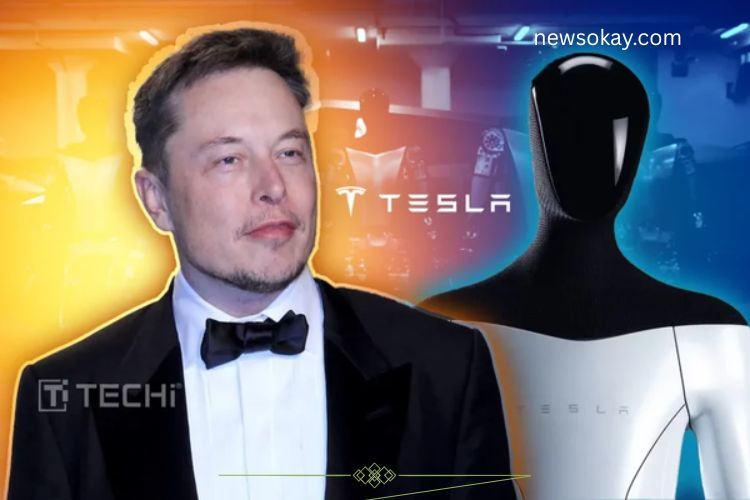
Tesla, currently swaying around $345, sits at a fascinating crossroads where Wall Street’s scrutiny meets Elon Musk’s expansive imagination. Investors aren’t just buying cars—they’re buying a story. Musk isn’t just running an electric vehicle company; he’s spearheading robotics, software research, and artificial intelligence. For many, Tesla is part business, part futuristic vision. Yet the market is divided: is this a tangible growth plan or a trailer for next year’s blockbuster?
As of August 28, Tesla shares traded at $345.55, down 1.8% over the past 24 hours following a significant rally fueled by optimism around autonomy and robotics. The stock recently broke above a long-term falling trendline, signaling a potential reversal after months of consolidation. Tesla now hovers just below a technical buy point at $348.98, indicated by a flat base pattern.
Technical Landscape: Support, Resistance, and Momentum
Traders are closely watching Tesla’s 50-day moving average at $340 as a key short-term support level. Over the longer term, the picture remains positive, with the 200-day moving average at $232.50 supporting an upward trend. Momentum indicators also suggest balance: Tesla’s Relative Strength Index (RSI) sits at 53, showing neither overbought nor oversold conditions.
These technical cues indicate Tesla is poised for a potential breakout, but investor caution remains vital. A sustained move above $348.98, particularly with volume support, could open the path toward $360–$370, with resistance near $380 by mid-September. Conversely, a drop below the 50-day average could trigger a short-term pullback.
AI and Autonomy Driving Investor Sentiment
Tesla’s recent surge is less about immediate earnings and more about the narrative Musk has cultivated. He’s focusing investor attention on AI, robotics, and software as the next growth engines. In a recent company-wide address, Musk described a future where robotaxis and the Optimus robot could overshadow electric vehicles themselves. Tesla, he says, is building “a legion of Optimus robots,” signaling a shift from automaker to robotics and AI innovator.
On the autonomous driving front, Musk teased version 14 of Full Self-Driving (FSD), hinting that version 15 could deliver exponential safety improvements later this year. Tesla is also advancing FSD deployment in Australia, a critical milestone in its global expansion strategy. These developments have fueled optimism, pushing the stock higher despite mixed short-term fundamentals.
Fragile Fundamentals and Elevated Valuation
Despite the excitement around innovation, Tesla’s core financials present cautionary signals. The company is heading into its third consecutive year of declining profits. Automotive revenue for Q2 2025 fell 12% year-over-year, marking the largest decline since Tesla’s early days.
Meanwhile, valuation remains elevated. Tesla trades at a forward P/E of 68, well above industry peers, reflecting high expectations for Musk’s AI and robotics ambitions. If execution falls short, investors may lose confidence in what has largely been a story-driven rally.
Breakout Test: What Traders Should Watch
Tesla is at a critical juncture near its breakout level of $348.98. A decisive move above this level, supported by strong volume, could lift the stock to the $360–$370 range. Resistance at $380 lies ahead, but failure to hold above short-term support at the 50-day moving average could spark a retracement.
In a neutral scenario, Tesla may consolidate between $340–$355, as investors digest robotics updates and wait for tangible progress in autonomy. For traders and investors, these technical and narrative factors will likely define near-term performance.
Tesla Beyond Cars: The Robotics Gamble
Musk’s latest initiatives emphasize that Tesla is more than an automaker. With the Optimus robot project and vision-based AI models, the company is betting on physical AI as its next growth driver. These ventures are compelling, but investors must weigh them against ongoing earnings pressure and competition in the EV and AI markets.
Tesla remains a high-risk, high-reward proposition. If Optimus and autonomous driving technologies achieve commercial adoption, the company could redefine itself as the “Apple of embodied AI.” If not, Tesla risks becoming a cautionary tale of overpromising in tech.
Balancing Hype and Reality
For now, Tesla occupies a precarious position. Its stock reflects both aspiration and speculation. The company’s story—driven by Musk’s vision for robotics and AI—is compelling, yet the underlying financials and competitive pressures cannot be ignored.
Investors face a central question: will Tesla surpass the $348 buy point, or will the weight of its lofty ambitions hold it back? The market’s verdict will hinge on tangible execution, not just visionary rhetoric.
Frequently Asked Questions:
Why is Tesla considered on the verge of a major breakout?
Tesla’s stock is approaching a technical buy point at $348.98, following a rally driven by optimism in AI, robotics, and autonomous driving. Breaking above this level with volume support could push the stock toward new highs.
How is Elon Musk influencing Tesla’s stock movement?
Musk’s ambitious vision for AI, robotics, and Full Self-Driving (FSD) technology drives investor sentiment. His announcements about Optimus robots and autonomous vehicles often create narrative momentum that impacts Tesla’s stock price.
What role do AI and robotics play in Tesla’s growth strategy?
Tesla is positioning itself beyond an automaker. AI-powered robots, autonomous driving, and software innovations are viewed as future growth engines that could redefine Tesla’s business model.
Is Tesla currently profitable?
Tesla faces short-term challenges. It has experienced declining profits in recent quarters, and automotive revenue fell in Q2 2025. Investors are weighing Musk’s ambitious vision against these fundamentals.
What are the key technical indicators to watch for Tesla?
Traders focus on the 50-day moving average at $340 for short-term support and the breakout level at $348.98. The 200-day moving average at $232.50 supports a longer-term upward trend, while the RSI of 53 indicates balanced momentum.
How risky is investing in Tesla right now?
Tesla is high-risk, high-reward. Its stock is influenced by ambitious innovation narratives, but fundamentals and elevated valuations pose potential downside. Execution of AI and robotics projects will be critical.
What are the potential price targets if Tesla breaks out?
If Tesla breaks above $348.98, short-term targets could reach $360–$370, with resistance near $380. Failure to maintain support could result in consolidation or a pullback.
Conclusion
Tesla stands at a critical crossroads, balancing visionary innovation with real-world execution. Elon Musk’s bold push into AI, robotics, and autonomous driving has captivated investors, making Tesla more than just an automaker—it’s a story-driven growth play. Yet, the company faces tangible challenges, including declining profits, elevated valuation, and intense competition in EVs and AI. The stock’s near-term trajectory hinges on breaking key technical levels and delivering concrete results from initiatives like the Optimus robot and Full Self-Driving technology. Success could redefine Tesla as a leader in physical AI, while failure could turn narrative-driven enthusiasm into a cautionary tale.