
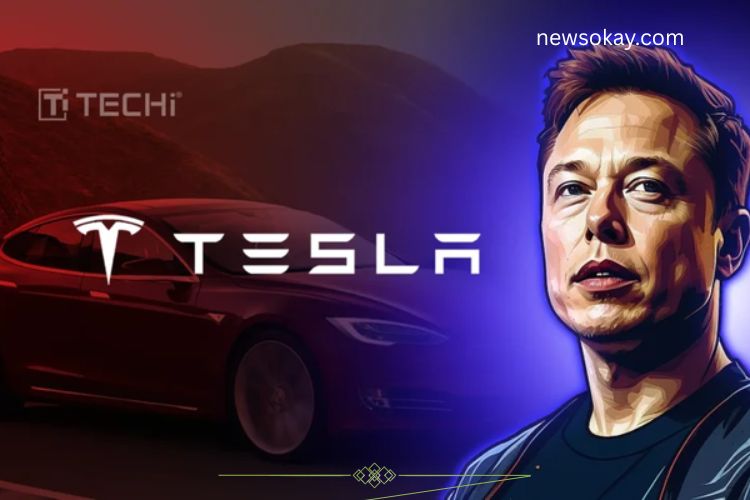
Tesla remains the stock market’s ultimate thrill ride—exciting, unpredictable, and impossible to ignore. The company that transformed electric vehicles (EVs) into a global phenomenon has seen its shares swing wildly over the past year. Following a scorching rally in 2023 and 2024, Tesla’s stock performance in 2025 has been more turbulent, keeping investors both anxious and hopeful.
The year began on solid ground, but weak Q1 and Q2 results rattled confidence. By mid-August, Tesla’s stock had plunged nearly 28% below its December 2024 all-time high. Yet a recent 5.66% gain in one week has tempered losses, reducing year-to-date declines to 8.3%. Investors now watch closely as Elon Musk navigates ambitious projects—Robotaxis, AI initiatives, and political complexities—while the core EV business faces stiff competition. The pressing question: can Tesla maintain momentum, or will challenges catch up?
Read More: Buy the Switch 2: Missed Pre-Order? Don’t Panic—GameStop & Best Buy Are Restocking on Launch Day!
Musk’s Vision: Success, Storms, and Spectacle
Tesla’s meteoric rise over the past decade created wealth for early investors and cemented Elon Musk’s reputation as a visionary—though one often mired in controversy. While innovation has delivered spectacular gains, recent setbacks remind investors that betting on a Musk-led company carries significant risk.
From its 2010 IPO to unveiling its Robotaxi plans in 2025, Tesla has balanced groundbreaking achievements with sharp declines. Wall Street remains divided: is Tesla a premier growth story, or a cautionary tale in the volatile world of tech-driven mobility?
Key Drivers of Tesla’s Stock Performance
Tesla’s strength lies in its EV business, but vulnerabilities are emerging. Annual sales have softened, margins are narrowing, and competition is intensifying across North America, Europe, and China. Pandemic-era demand and government subsidies are normalizing, exposing Tesla to price wars and geopolitical risks.
Investors’ enthusiasm extends beyond vehicles. Tesla’s Full Self-Driving (FSD) platform, energy ventures, humanoid robotics, and AI efforts are viewed as long-term growth catalysts. The highly anticipated Robotaxi project represents Musk’s wildcard—immense potential exists if regulatory hurdles are cleared and public adoption follows. Yet execution risks are high, and analysts remain split on whether Tesla will lead the next era of transportation or overpromise once again.
Tesla’s relationship with Washington adds complexity. Musk’s support for former President Trump initially fueled hope for deregulation, but the stock has largely retraced post-election gains. Trade disputes, tariffs, and reduced EV incentives create further macroeconomic headwinds that may weigh on performance in the near term.
Wall Street’s Polarized Outlook
Tesla’s 2025 prospects generate some of Wall Street’s most heated debates. Analysts’ price targets span extremes: Guggenheim warns of a sharp decline, rating the stock at $175, while Benchmark predicts a bullish $475 on the potential success of Robotaxis.
Barclays projects a moderate $275, citing a disconnect between Tesla’s hype and fundamentals. Goldman Sachs and Mizuho remain neutral, acknowledging potential modest upside while noting softening EV demand in North America and Europe.
Consensus is elusive. Among 36 analysts, the median forecast sits at $305.37—a potential 12% downside. Conversely, 24/7 Wall St. estimates $352.99, assuming continued revenue growth and AI scaling. Tesla’s valuation hinges more on investor conviction in Musk’s vision than on consensus fundamentals.
Tesla’s 2025 Operational Framework
Analysts project 2025 revenue of $117.2 billion, a 17.5% increase year over year, with 1.95 million vehicle deliveries—slightly below consensus and Tesla’s prior guidance. California market share has slipped below 50%, raising questions about Tesla’s dominance in its home market. Global registrations are softening, and institutional holdings have decreased to 49.61%.
Despite these challenges, Tesla’s AI and Robotaxi ambitions could redefine mobility. Success in scaling, safety, and consumer adoption could transform Tesla from an EV manufacturer into a transportation-as-a-service leader. A misstep, however, could reignite skepticism over Tesla’s ability to deliver beyond vehicles.
Tesla Stock Price Predictions for 2025
Forecasts for Tesla’s stock in 2025 reflect the polarization surrounding the company. The median analyst target of $305.37 implies roughly 12% downside, while a more optimistic $352.99 suggests limited upside. Extreme predictions range from a bearish $19.05 to a bullish $500, illustrating the high stakes and uncertainty in Tesla’s growth story.
Three primary factors will shape the outcome: the stabilization of global EV demand amid rising competition, the success of Tesla’s autonomous and Robotaxi initiatives, and macroeconomic variables influenced by U.S. policy, tariffs, and global subsidies.
Risks and Opportunities: The Tesla Dilemma
Tesla remains the quintessential high-risk, high-reward stock. Bulls see Musk’s Robotaxi vision as a revolution in transportation, while bears point to declining market share, compressed margins, and operational vulnerabilities. Most likely, reality will fall somewhere between these extremes.
Tesla embodies two personas simultaneously: a pressured EV manufacturer contending with margin and growth challenges, and an AI-driven mobility pioneer poised to transform transportation. This tension drives fascination and frustration alike. For investors, Tesla is less about traditional metrics and more about belief in Musk’s ability to deliver transformative innovation.
Frequently Asked Questions:
What is Tesla’s 2025 roadmap?
Tesla’s 2025 roadmap focuses on expanding its electric vehicle lineup, scaling Full Self-Driving (FSD) technology, and launching Robotaxis. The company is also advancing AI, energy storage solutions, and humanoid robotics, aiming to transform mobility beyond traditional EV manufacturing.
When will Tesla Robotaxis be available?
Tesla has announced plans to launch its Robotaxi service in 2025, but availability will depend on regulatory approvals, consumer adoption, and the completion of advanced safety testing.
How is Tesla performing in the stock market in 2025?
Tesla’s stock has been volatile in 2025. After strong growth in previous years, shares experienced a pullback due to weaker Q1 and Q2 results, increased competition, and macroeconomic headwinds. Analysts remain divided, with price targets ranging from significant downside to substantial upside.
What are the risks facing Tesla in 2025?
Major risks include rising competition in the EV market, narrowing profit margins, regulatory hurdles for autonomous vehicles, trade tensions, and fluctuations in EV incentives. Investor sentiment is also influenced by Elon Musk’s public decisions and political associations.
How does Tesla’s AI and autonomous driving impact its growth?
Tesla’s AI initiatives, particularly Full Self-Driving and Robotaxis, are considered key long-term growth drivers. If successful, they could shift Tesla from an EV manufacturer to a transportation-as-a-service leader. However, execution risks remain high.
Will Tesla remain a market leader in EVs?
While Tesla retains significant market share, it is facing growing competition in the U.S., Europe, and China. Maintaining leadership will depend on innovation, cost management, and the adoption of autonomous technologies like Robotaxis.
What is Tesla’s revenue and delivery forecast for 2025?
Analysts estimate Tesla’s 2025 revenue at approximately $117.2 billion, with around 1.95 million vehicle deliveries. These figures indicate growth but slightly lag previous guidance and market expectations.
Conclusion
Tesla in 2025 stands at a critical crossroads. Its ambitious vision—from expanding electric vehicles to launching Robotaxis and advancing AI—positions the company as a potential pioneer in next-generation mobility. At the same time, rising competition, narrowing margins, regulatory challenges, and market volatility highlight the risks investors cannot ignore. The company embodies a dual identity: a pressured EV manufacturer navigating short-term hurdles and a visionary tech leader pursuing transformative innovation. For investors, Tesla is more than a stock—it is a test of conviction, weighing belief in Elon Musk’s bold vision against the realities of financial fundamentals.