
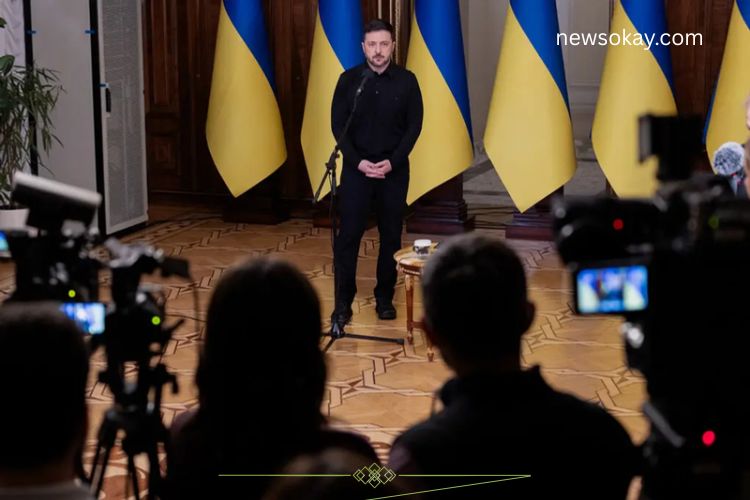
Ukraine is navigating one of the most consequential political transitions in years, as President Volodymyr Zelensky undertakes a major reshuffle of his government amid ongoing war and peace negotiations. For weeks, the country faced a leadership vacuum: no energy minister during rolling blackouts caused by Russian attacks, no justice minister as corruption scandals erupted, and no presidential chief of staff to guide critical discussions with the United States.
This period of uncertainty threatened to paralyze governance, but Zelensky’s recent appointments signal an effort to stabilize Ukraine’s leadership and reinforce his control at a critical juncture.
Read More: Xreal’s New Glasses Are Smarter, Sleeker, and More Affordable—Plus an Exciting Switch Dock Arrival!
Filling the Leadership Void
In a rapid sequence of moves, Zelensky appointed a new chief of staff and signaled the replacement of his defense minister. He also proposed shifting the current defense minister to the energy ministry. Additional changes in both government and military leadership are expected.
These decisions follow weeks of delay, which analysts say risked hardening vacancies into entrenched dysfunction. Zelensky’s cautious approach appears partly shaped by a recent corruption scandal that implicated members of his inner circle, undermining his political standing and forcing him to navigate appointments carefully.
Political Stakes Rise
Zelensky’s reshuffle comes at a time when Ukrainian politics is reawakening. For nearly four years, the wartime environment allowed him to consolidate power with minimal opposition. Now, members of Parliament see opportunities to assert influence, although the uncertainty of ministerial posts and upcoming elections has made many hesitant to step forward.
David Arakhamia, head of Zelensky’s party faction in Parliament, highlighted the challenge with a dry joke in December: “We are looking for an energy minister. Raise your hands. Who wants to try?” The remark underscored the difficulty of filling key positions in a government facing both war pressures and internal political turbulence.
Peace Talks Complicate Appointments
Accelerating peace negotiations have intensified planning for postwar elections, creating further hesitation among potential ministers. Lawmakers are wary of committing to roles that could vanish within months if political shifts occur. Rumors of additional corruption revelations have also added a layer of caution, leaving Parliament in what Oleksandr Merezhko, head of the foreign affairs committee, described as “a sort of interregnum” where officials wait to see how developments unfold before acting.
Key Appointments Signal Strategic Moves
One of the most notable changes is the appointment of Kyrylo Budanov, head of Ukraine’s military intelligence agency, as Zelensky’s new chief of staff. Budanov is widely celebrated for daring operations in the conflict with Russia and had long been viewed as a potential political rival. Analysts differ on the implications of his promotion—some see it as a move to limit his independent influence, while others suggest it positions him as a possible successor.
Budanov’s close ties with the United States, built through a C.I.A.-supported program, also suggest Zelensky is positioning Kyiv for stronger leverage in ongoing peace talks with Washington.
Defense and Energy Ministries in Focus
Zelensky has tapped Mykhailo Fedorov, vice prime minister and minister of digital transformation, to become defense minister. Fedorov, a trusted ally since Zelensky’s 2019 presidential campaign, is expected to maintain loyalty and efficiency in a sensitive role. Meanwhile, current defense minister Denys Shmyhal, a former prime minister, has been proposed for the energy ministry, reflecting strategic realignment of Ukraine’s top leadership.
Political analysts note that Zelensky’s moves aim to secure domestic stability while managing three critical fronts: defense, peace negotiations, and internal governance.
Corruption Scandal Shakes Government
The reshuffle is partly a response to a sweeping corruption scandal exposed in November. Ukrainian anti-corruption agencies revealed that officials siphoned approximately $100 million through a state-owned nuclear power company. The fallout forced Zelensky’s chief of staff, along with the energy and justice ministers, to resign, though none face formal charges.
Replacing these posts, particularly the energy ministry, proved challenging. Russian attacks on Ukraine’s power infrastructure made this role both critical and high-risk, deterring candidates despite the urgency. Analysts highlight that past corruption and constant security threats created a nearly impossible environment for new leadership in the energy sector.
Challenges in Securing Leadership
Several potential candidates for the energy ministry declined the role, including Serhii Koretskyi, head of the state-owned gas company, and Andriy Gerus, head of Parliament’s energy committee. Merezhko explained that uncertainty over the duration of the current government and upcoming elections made lawmakers reluctant to accept posts that could be short-lived.
Ukraine has not held presidential or parliamentary elections since 2019. Martial law, imposed following Russia’s invasion in 2022, prohibits elections during wartime. Any peace settlement is expected to lift martial law and prompt swift elections, further complicating ministerial recruitment.
Parliamentary Approval Remains Crucial
Although Zelensky has proposed appointments, Parliament must approve them during its next plenary session in mid-January. Historically, the legislative body largely acted as a rubber stamp due to Zelensky’s wartime majority, but recent corruption scandals have eroded trust, even within his own party, Servant of the People.
Lawmakers previously supported controversial laws affecting anti-corruption agencies under Zelensky’s direction, later reversing course following public protests. These events highlight the growing independence of Parliament and indicate that approval of new ministers may face scrutiny and negotiation rather than automatic endorsement.
Balancing War, Politics, and Reform
Zelensky’s reshuffle illustrates the delicate balancing act of governing during war while responding to political realities and public scrutiny. Appointments like Budanov and Fedorov signal efforts to consolidate competent leadership while navigating internal party dynamics and public expectations.
Experts note that the reshuffle also serves as a message to domestic and international observers: Ukraine aims to maintain stability, strengthen its negotiating position, and project confidence during a highly volatile period.
Frequently Asked Questions:
Why is Ukrainian politics described as “igniting again”?
After years of wartime unity under President Zelensky, political activity is resurging as key government positions remain vacant and Parliament becomes more assertive. Reshuffles and corruption scandals have triggered renewed debates and competition among lawmakers.
What high-stakes challenges is Zelensky currently facing?
Zelensky must manage multiple pressures: filling critical government posts, addressing corruption scandals, navigating peace talks with the U.S., and maintaining stability during ongoing conflict with Russia. Each decision carries major domestic and international implications.
Which key government positions are affected by the reshuffle?
The most urgent positions include the energy minister, justice minister, defense minister, and presidential chief of staff. These roles are central to managing Ukraine’s infrastructure, security, and diplomatic negotiations.
How has corruption influenced Zelensky’s political decisions?
Recent scandals exposed kickback schemes worth millions of dollars involving top officials. These revelations forced resignations and made Zelensky more cautious in selecting trusted ministers, affecting the pace and strategy of his reshuffle.
What role do peace talks play in Ukraine’s current political scenario?
Accelerating peace negotiations have intensified planning for postwar elections and complicated ministerial appointments. Officials are hesitant to accept roles that might change after elections or as part of a peace settlement.
Who are the prominent figures in Zelensky’s reshuffle?
Kyrylo Budanov, head of military intelligence, was appointed as chief of staff, and Mykhailo Fedorov was proposed as defense minister. Current defense minister Denys Shmyhal may move to the energy ministry. These appointments are strategic for both political control and international negotiations.
How is Parliament influencing Zelensky’s reshuffle?
Parliament, which previously largely rubber-stamped laws, is now exercising more influence due to internal corruption scandals and political uncertainty. Approvals for ministerial positions may involve negotiation rather than automatic endorsement.
Conclusion
Ukraine’s political landscape is at a pivotal moment. President Zelensky’s reshuffle reflects the high stakes of managing wartime governance, addressing corruption, and preparing for postwar realities. By strategically filling key positions in defense, energy, and administration, Zelensky aims to stabilize the government, strengthen international alliances, and maintain public trust. How he navigates these challenges will not only shape Ukraine’s ability to sustain its war efforts but also define the country’s political trajectory for years to come. In a period of uncertainty and opportunity, decisive leadership is essential to steer Ukraine toward stability and resilience.