


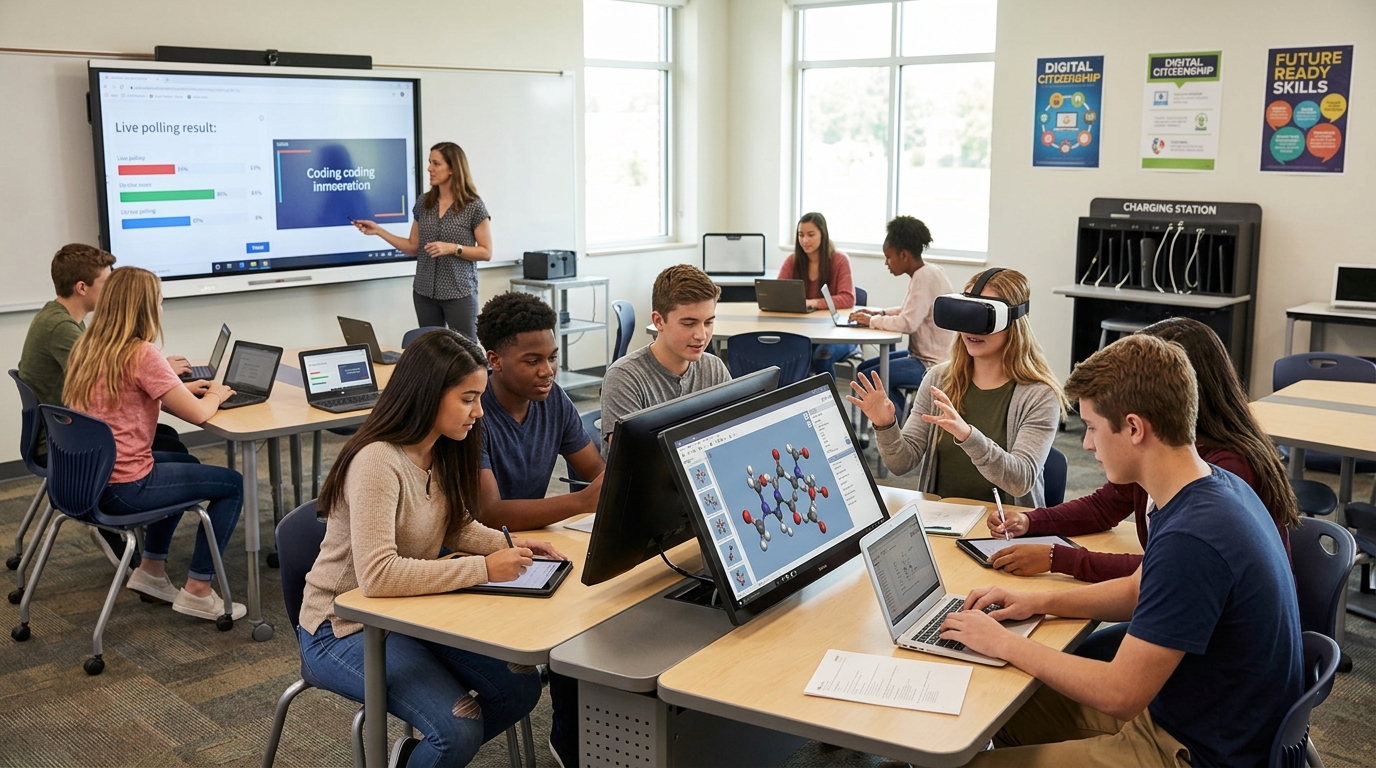
Technology has transformed modern education by improving communication, accessibility, and learning methods across schools, colleges, and universities. Students now gain knowledge through interactive platforms, online resources, and digital classrooms. Teachers also benefit from advanced tools that simplify lesson planning and student management. Educational technology continues creating smarter, faster, and more engaging learning experiences for learners throughout Pakistan and worldwide today.
Digital Classrooms
Interactive Learning Methods
Interactive digital classrooms encourage students to participate actively during lessons through quizzes, presentations, and educational applications. Teachers can explain complex topics using videos, animations, and graphics, making concepts easier to understand. This learning environment increases concentration, improves academic performance, and motivates students to develop stronger educational interests daily.
Better Student Engagement
Technology helps teachers maintain student attention by introducing creative learning activities inside classrooms. Smartboards, tablets, and educational software make lessons enjoyable while reducing boredom. Students become more confident when participating in classroom discussions, collaborative tasks, and digital exercises, creating stronger communication skills alongside improved educational understanding for everyone.
Easy Access To Materials
Students can easily download notes, assignments, presentations, and recorded lectures through digital learning systems. Educational resources remain available anytime, helping learners revise important topics without difficulties. This convenience reduces dependency on printed materials while supporting independent learning habits, especially for students managing multiple subjects and demanding academic responsibilities successfully.
Improved Teacher Communication
Technology enables teachers to communicate quickly with students and parents using messaging applications, educational portals, and email systems. Important announcements, assignments, and examination schedules become easier to share immediately. This strong communication network improves academic coordination while helping parents remain informed about their children’s educational progress regularly throughout semesters.
Virtual Learning Opportunities
Virtual classrooms allow students to continue education from home during emergencies, travel situations, or personal challenges. Online lessons provide flexibility while maintaining educational consistency through video conferencing and digital platforms. Students can ask questions, submit assignments, and participate actively, ensuring uninterrupted learning experiences regardless of physical classroom limitations today.
Online Educational Resources
Digital Libraries Availability
Digital libraries provide students access to thousands of books, journals, research papers, and academic articles through internet platforms. Learners no longer depend entirely on physical libraries for educational materials. This accessibility supports advanced research skills, saves valuable time, and encourages students to explore broader academic subjects independently daily.
Educational Video Platforms
Educational video platforms help students understand difficult subjects through visual demonstrations and step-by-step explanations. Teachers also recommend informative videos for homework and revision purposes. These resources improve knowledge retention, strengthen conceptual understanding, and create flexible learning opportunities for students who prefer visual educational methods over traditional reading techniques.
Online Skill Development
Students can improve professional and technical abilities through online courses covering graphic design, programming, communication, and digital marketing. These learning opportunities prepare learners for future careers while supporting personal development. Technology allows students to acquire practical skills alongside academic education, increasing employability within competitive professional industries globally.
Affordable Learning Options
Online educational platforms reduce educational expenses by offering affordable or free learning resources for students everywhere. Learners can access courses, tutorials, and study materials without purchasing expensive textbooks. This affordability supports equal educational opportunities, especially for students belonging to financially limited families seeking quality education through accessible technological solutions.
Global Knowledge Sharing
Technology connects students with educators and learners from different countries through webinars, online workshops, and virtual discussions. These interactions encourage cultural understanding while exposing students to international educational perspectives. Global knowledge sharing develops confidence, communication abilities, and broader thinking patterns that support academic and professional success effectively today.
| Technology Tool | Educational Benefit |
|---|---|
| Smartboards | Interactive classroom learning |
| Online Courses | Flexible education access |
| Educational Apps | Better student engagement |
| Video Lectures | Simplified concept understanding |
Student Skill Development
Critical Thinking Improvement
Educational technology encourages students to solve problems through research, analysis, and digital collaboration activities. Learners explore information independently while comparing multiple viewpoints before forming conclusions. This process develops critical thinking abilities, helping students make informed decisions, understand academic subjects deeply, and perform effectively within modern educational environments today.
Creativity Through Technology
Students use technology for creating presentations, videos, designs, and digital projects during academic activities. These creative opportunities encourage innovative thinking while improving artistic and technical abilities simultaneously. Educational technology supports self-expression, motivates students to explore original ideas, and strengthens confidence when presenting creative assignments before classmates regularly.
Better Research Skills
Technology provides students immediate access to educational websites, online journals, and research databases for academic purposes. Learners can collect information quickly while evaluating reliable sources effectively. This process strengthens research skills, improves academic writing quality, and prepares students for advanced educational challenges requiring detailed analytical understanding and accuracy.
Enhanced Communication Abilities
Students improve communication skills through online discussions, group projects, virtual presentations, and collaborative learning activities. Technology encourages learners to express ideas confidently while interacting with classmates and teachers professionally. These experiences strengthen speaking, writing, and teamwork abilities, supporting educational growth alongside future workplace communication requirements successfully today.
Independent Learning Habits
Technology encourages students to study independently by providing flexible learning materials and self-paced educational opportunities. Learners can review lessons repeatedly, complete online exercises, and explore additional resources without direct supervision. This independence improves responsibility, time management, and confidence while preparing students for lifelong educational and professional development continuously.
Teacher Performance Enhancement
Simplified Lesson Planning
Technology helps teachers prepare organized lessons using digital presentations, educational templates, and online teaching resources. Planning becomes faster and more efficient while improving classroom delivery methods. Teachers can customize materials according to student needs, ensuring better understanding, stronger engagement, and productive educational experiences throughout different academic subjects daily.
Faster Assignment Management
Teachers can distribute assignments, collect student submissions, and provide feedback through digital educational platforms efficiently. This process reduces paperwork while saving valuable instructional time during busy academic schedules. Faster assignment management improves classroom organization, supports timely evaluations, and ensures students receive academic guidance without unnecessary delays regularly today.
Accurate Student Assessment
Educational software allows teachers to evaluate student performance through automated quizzes, online tests, and digital grading systems. These tools provide accurate results quickly while reducing manual checking efforts significantly. Teachers can identify learning weaknesses easily, helping students improve academic performance through targeted educational support and personalized guidance effectively.
Professional Development Opportunities
Teachers can participate in online workshops, training programs, and educational seminars to improve professional knowledge continuously. Technology provides opportunities for learning modern teaching strategies and classroom management techniques conveniently. These experiences strengthen teaching quality while helping educators remain updated with current educational trends and technological advancements globally today.
Improved Classroom Organization
Technology supports better classroom organization through attendance systems, scheduling software, and digital communication tools. Teachers can manage academic records efficiently while maintaining smooth educational operations daily. Organized classrooms reduce confusion, improve student discipline, and create productive learning environments where educational goals become easier to achieve successfully over time.
Accessibility In Education
Education For Remote Areas
Technology provides educational opportunities for students living in rural and remote locations where schools may lack qualified teachers or advanced facilities. Online learning platforms connect these students with quality educational resources and experienced instructors, reducing educational inequality while supporting academic growth within underserved communities across Pakistan today effectively.
Support For Disabled Students
Educational technology assists disabled students through screen readers, voice recognition software, subtitles, and specialized learning applications. These tools create inclusive educational environments where learners with physical or learning challenges can participate confidently. Technology improves accessibility while ensuring equal learning opportunities for students requiring additional educational support regularly today.
Flexible Learning Schedules
Technology allows students to study according to personal schedules through recorded lectures, online classes, and digital educational resources. This flexibility benefits working students, parents, and individuals managing personal responsibilities alongside education. Learners gain better control over study routines while maintaining academic progress without unnecessary pressure or scheduling conflicts.
Multilingual Learning Support
Educational platforms offer learning materials in multiple languages, helping students understand lessons more comfortably. Translation tools and multilingual educational resources improve comprehension for learners facing language barriers. This support encourages confidence, strengthens classroom participation, and creates inclusive educational experiences for students from different linguistic backgrounds across educational institutions today.
Equal Educational Opportunities
Technology helps reduce educational gaps by providing accessible learning resources regardless of financial status, location, or background. Students from different communities can access similar educational materials and learning opportunities through internet platforms. This equality supports academic fairness while encouraging national educational development and stronger future professional opportunities widely today.
Modern Teaching Techniques
Gamified Learning Activities
Gamified educational activities use rewards, points, and interactive challenges to make learning enjoyable for students. These methods increase classroom participation while improving concentration and motivation significantly. Students develop stronger interest in academic subjects when educational lessons become entertaining, competitive, and engaging through creative technological learning applications regularly today.
Visual Learning Approaches
Technology improves visual learning through animations, infographics, educational videos, and graphical presentations during lessons. Students understand difficult concepts faster when information appears visually organized and attractive. These approaches strengthen memory retention, encourage classroom participation, and support learners who prefer visual educational experiences over lengthy traditional explanations effectively today.
Collaborative Learning Platforms
Collaborative digital platforms encourage students to work together through shared assignments, online discussions, and group projects. Technology strengthens teamwork abilities while improving communication and problem-solving skills simultaneously. Students learn cooperation, responsibility, and idea-sharing practices that support both academic success and future professional collaboration within workplaces successfully today.
Personalized Learning Experiences
Technology enables personalized learning by adapting educational content according to student abilities and academic performance levels. Learners can focus on weaker subjects while progressing comfortably through lessons independently. Personalized educational experiences improve understanding, reduce frustration, and help students achieve stronger academic outcomes through customized learning approaches regularly today.
Real-Time Academic Feedback
Educational technology provides immediate feedback during quizzes, assignments, and online tests, helping students identify mistakes quickly. Teachers can monitor performance instantly while offering timely guidance for improvement. Real-time feedback supports faster learning progress, increases student confidence, and encourages continuous academic development through consistent evaluation and support systems effectively.
Future Of Educational Technology
Artificial Intelligence In Learning
Artificial intelligence supports modern education through smart tutoring systems, automated grading, and personalized educational recommendations for students. These technologies improve learning efficiency while helping teachers manage academic responsibilities effectively. Artificial intelligence continues transforming classrooms by creating adaptive educational experiences tailored according to individual student performance and learning needs.
Virtual Reality Education
Virtual reality technology creates immersive educational experiences where students explore historical places, scientific concepts, and practical simulations realistically. Learners understand lessons better through visual interaction and engaging environments. Virtual reality improves curiosity, strengthens memory retention, and provides practical learning opportunities that traditional classroom methods often cannot deliver effectively.
Cloud-Based Educational Systems
Cloud technology allows schools and universities to store educational materials securely while providing easy access through internet-connected devices. Students and teachers can share files, assignments, and presentations efficiently from different locations. Cloud-based systems improve collaboration, reduce storage problems, and support flexible educational management practices successfully across institutions today.
Data-Driven Educational Decisions
Educational institutions use technology to analyze student performance data for improving teaching strategies and academic planning. Digital analytics help identify learning trends, strengths, and weaknesses quickly. These insights support informed educational decisions while helping teachers provide targeted assistance for students requiring additional academic guidance regularly throughout educational programs.
Expanding Global Education Networks
Technology continues expanding international educational networks through online universities, global training programs, and collaborative academic communities. Students gain access to worldwide educational opportunities without travelling abroad physically. These expanding networks encourage cultural understanding, professional growth, and academic cooperation while shaping the future of modern education positively today.
How does technology improve student learning?
Technology improves student learning through interactive lessons, flexible resources, and better communication between teachers and learners.
Why are online classes becoming popular?
Online classes provide flexibility, convenience, and easy educational access for students managing different responsibilities simultaneously.
Can technology replace traditional teachers?
Technology supports teachers effectively, but human guidance and classroom interaction remain essential within education systems.
What are the advantages of digital classrooms?
Digital classrooms improve engagement, simplify communication, and provide interactive educational experiences for students and teachers.
Is technology important for future education?
Technology remains essential because it continues improving accessibility, innovation, and educational quality across modern learning environments.
Conclusion
Technology has become an essential part of modern education by improving accessibility, communication, creativity, and learning efficiency for students and teachers alike. Digital tools continue transforming classrooms into engaging educational environments where learners develop valuable academic and professional skills successfully. As technology advances further, education systems worldwide will continue becoming smarter, faster, inclusive, and increasingly effective for future generations everywhere.
