


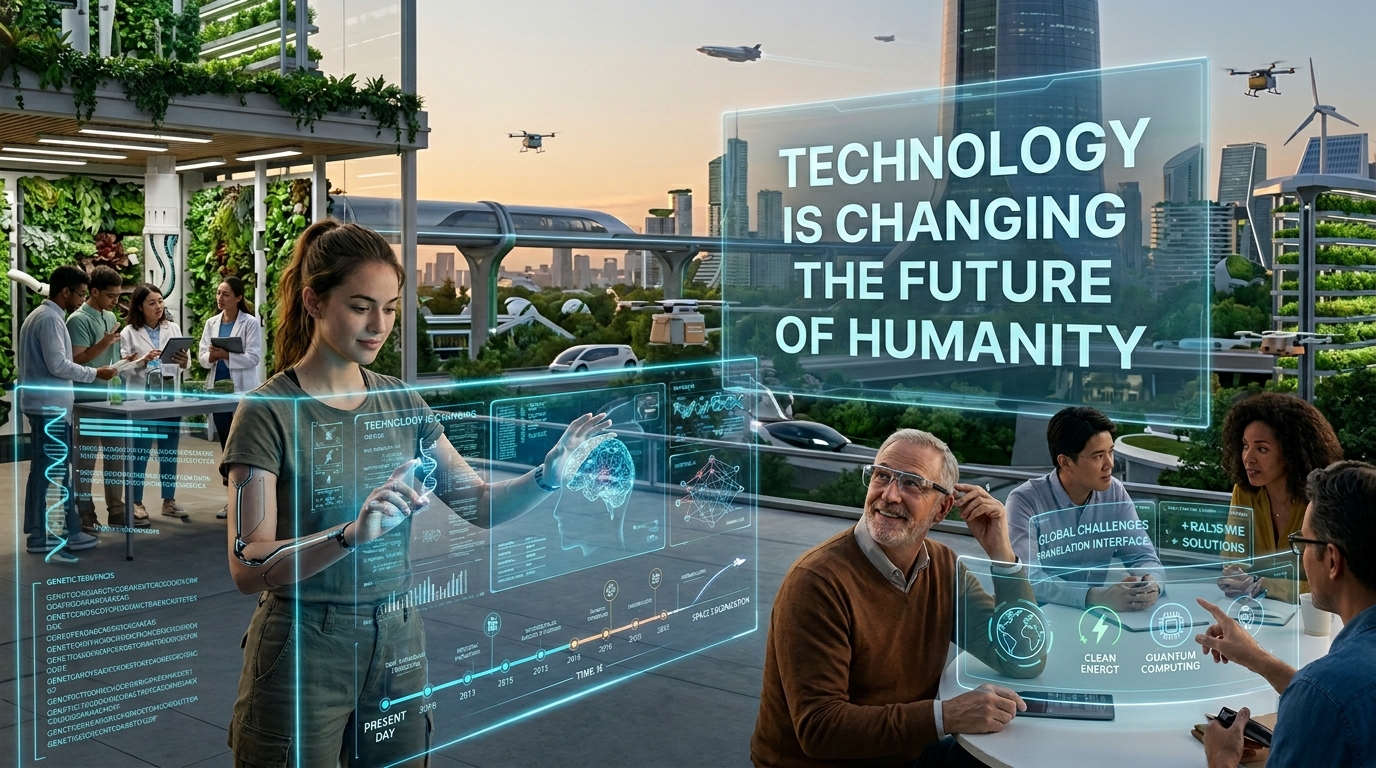
Technology is rapidly transforming the future of humanity through innovation, automation, communication, healthcare, and scientific discovery. Modern advancements continue reshaping industries, lifestyles, education, transportation, and global economies. People increasingly rely on digital systems for daily activities, while businesses adopt smarter technologies to improve efficiency. As society evolves, technology creates opportunities, challenges, and responsibilities that influence human progress, sustainability, and future generations worldwide.
Artificial Intelligence And Human Development
Smarter Decision Making
Artificial intelligence is improving human decision making across healthcare, education, finance, and transportation industries globally. Advanced algorithms analyze enormous data quickly, helping organizations predict trends, reduce risks, and improve planning accuracy. Businesses increasingly depend on intelligent systems for efficiency, productivity, customer satisfaction, and future operational growth successfully.
Automation In Daily Life
Automation technologies are simplifying household activities, workplace operations, transportation systems, and communication methods worldwide. Smart devices now manage schedules, monitor security, and control appliances automatically. Industries adopt robotics for manufacturing processes, reducing manual labor while increasing production speed, workplace safety, operational consistency, and overall economic performance significantly.
Personalized Digital Experiences
Technology companies create personalized experiences using artificial intelligence, machine learning, and consumer behavior analysis tools effectively. Streaming platforms recommend entertainment, online stores suggest products, and educational applications adapt lessons according to individual preferences. Personalized systems improve convenience, customer engagement, satisfaction levels, digital interaction quality, and online experiences considerably.
Ethical Challenges Of AI
Artificial intelligence introduces ethical concerns regarding privacy, job displacement, algorithmic bias, and human dependency globally. Governments and organizations continue developing policies to ensure responsible innovation and transparency. Society must balance technological advancement with human rights protection, fairness, accountability, public trust, social stability, and long term sustainability carefully.
AI In Future Industries
Future industries will heavily depend on artificial intelligence for innovation, productivity, and strategic development worldwide. Healthcare systems may diagnose diseases faster, transportation networks could become fully autonomous, and businesses might automate complex tasks efficiently. Artificial intelligence will continue shaping economies, employment structures, communication methods, and industrial competitiveness globally.
Technological Impact On Communication
Global Connectivity Expansion
Technology has connected people worldwide through smartphones, social media platforms, messaging applications, and video communication systems effectively. Families, businesses, and educational institutions maintain instant communication regardless of geographical distance. Improved connectivity encourages cultural exchange, international collaboration, economic opportunities, social interaction, information sharing, and stronger global relationships continuously.
Social Media Influence
Social media platforms significantly influence public opinions, consumer behavior, entertainment trends, and communication patterns globally. Individuals share experiences, businesses promote products, and communities organize social movements online. These platforms encourage creativity and awareness while raising concerns regarding misinformation, privacy protection, digital addiction, and mental wellbeing regularly.
| Technology Area | Future Impact | Human Benefit |
|---|---|---|
| Artificial Intelligence | Automation Growth | Better Efficiency |
| Healthcare Technology | Faster Treatments | Longer Lifespans |
| Renewable Energy | Cleaner Environment | Sustainable Living |
| Space Innovation | Scientific Discovery | Global Advancement |
Virtual Collaboration Growth
Virtual collaboration tools have transformed professional communication, remote working, and online learning environments significantly. Video conferencing platforms allow employees, students, and organizations to interact efficiently from different locations. Businesses reduce operational expenses while maintaining productivity, flexibility, teamwork, communication effectiveness, employee satisfaction, and global workforce accessibility successfully.
Language Translation Technology
Modern translation technologies help people communicate across different languages more effectively than before. Artificial intelligence powered systems instantly translate conversations, documents, and online content accurately. These innovations support international business, tourism, education, cultural understanding, global partnerships, diplomatic communication, accessibility improvements, and worldwide information exchange continuously.
Future Of Digital Communication
Digital communication will continue evolving through virtual reality, augmented reality, and advanced networking technologies globally. Future systems may provide immersive interactions, realistic virtual meetings, and faster information sharing experiences. These developments could reshape workplaces, education systems, entertainment industries, social relationships, consumer behavior, and international collaboration dramatically.
Healthcare Innovations Through Technology
Advanced Medical Diagnostics
Technology improves medical diagnostics through artificial intelligence, imaging systems, and data analysis tools effectively. Doctors can detect diseases earlier, improve treatment accuracy, and reduce medical complications significantly. Faster diagnostic procedures increase patient survival rates while enhancing healthcare efficiency, accessibility, medical research capabilities, and long term patient outcomes consistently.
Telemedicine And Remote Care
Telemedicine allows patients to receive medical consultations remotely through digital communication platforms conveniently. Rural communities gain better healthcare access without traveling long distances for treatment. Remote healthcare services reduce hospital pressure while improving patient convenience, medical accessibility, emergency response capabilities, treatment continuity, healthcare affordability, and monitoring efficiency substantially.
Robotic Surgical Procedures
Robotic surgical systems help doctors perform complex operations with greater precision and control successfully. These technologies reduce surgical risks, minimize recovery periods, and improve patient outcomes significantly. Hospitals increasingly adopt robotic assistance for specialized procedures because it enhances accuracy, operational consistency, medical efficiency, patient safety, and healthcare innovation.
Wearable Health Technologies
Wearable technologies monitor heart rates, physical activity, sleep patterns, and overall health conditions continuously. Smart devices provide real time information that helps users maintain healthier lifestyles and detect medical concerns early. Healthcare professionals use collected data to improve treatment planning, preventive care, patient engagement, and wellness management effectively.
Future Healthcare Advancements
Future healthcare technologies may include personalized medicine, gene editing, nanotechnology, and artificial intelligence driven treatments globally. Scientists continue researching innovative solutions for chronic diseases, aging, and medical emergencies. Technological progress could significantly improve life expectancy, healthcare affordability, disease prevention, patient experiences, and overall public health standards worldwide.
Education In The Digital Age
Online Learning Platforms
Online learning platforms provide flexible educational opportunities for students, professionals, and lifelong learners worldwide. Digital classrooms allow individuals to access courses, lectures, and training materials anytime conveniently. Educational technology improves accessibility, skill development, learning efficiency, academic collaboration, career advancement opportunities, and global knowledge sharing significantly today.
Interactive Educational Tools
Interactive educational technologies enhance classroom engagement through simulations, virtual laboratories, and multimedia learning resources effectively. Students better understand complex subjects using visual and practical experiences. Teachers use digital tools to personalize lessons, encourage participation, improve academic performance, strengthen communication, and support diverse learning styles successfully across institutions.
Artificial Intelligence In Education
Artificial intelligence helps educational institutions personalize learning experiences according to student needs and abilities efficiently. Intelligent systems analyze performance data, recommend study materials, and identify learning challenges quickly. Schools and universities increasingly adopt these technologies to improve academic outcomes, educational accessibility, teaching quality, and administrative efficiency worldwide.
Digital Skills Development
Technology encourages digital skills development essential for modern careers and future economic growth globally. Students learn coding, cybersecurity, communication, and data analysis through advanced educational programs effectively. Developing technological expertise prepares individuals for competitive industries while supporting innovation, entrepreneurship, workforce adaptability, productivity, and long term professional success consistently.
Future Of Smart Education
Future education systems may integrate virtual reality, artificial intelligence, and immersive digital environments extensively. Students could experience realistic simulations, interactive global classrooms, and personalized educational journeys effectively. Technological advancements will likely transform teaching methods, educational accessibility, learning flexibility, academic collaboration, career preparation, and knowledge distribution worldwide permanently.
Environmental Technology And Sustainability
Renewable Energy Solutions
Renewable energy technologies help reduce environmental pollution and dependence on fossil fuels globally. Solar panels, wind turbines, and hydroelectric systems generate cleaner electricity for homes and industries efficiently. Governments and businesses invest heavily in sustainable energy projects to support environmental protection, economic stability, and long term ecological balance successfully.
Smart Cities Development
Smart city technologies improve urban living through intelligent transportation, energy management, and digital infrastructure systems effectively. Cities use sensors and data analysis to reduce traffic congestion, conserve resources, and improve public services. Smart urban planning supports sustainability, environmental protection, public safety, economic growth, and community wellbeing consistently worldwide.
Waste Management Innovation
Technology supports advanced waste management through recycling systems, automated sorting, and environmentally friendly disposal methods efficiently. Innovative solutions reduce pollution while promoting resource conservation and sustainability globally. Communities benefit from cleaner environments, improved public health, reduced landfill usage, stronger environmental awareness, and more responsible consumption habits increasingly today.
Climate Change Monitoring
Advanced technologies monitor climate change patterns using satellites, sensors, and environmental data analysis tools globally. Scientists track weather conditions, rising temperatures, and natural disasters more accurately than before. These innovations help governments create environmental policies, disaster preparedness plans, conservation strategies, sustainability programs, and ecological protection initiatives effectively.
Sustainable Future Technologies
Future technologies will likely focus on sustainability, renewable resources, and environmentally responsible innovation worldwide. Researchers continue developing cleaner transportation systems, energy efficient devices, and sustainable industrial processes effectively. Technological progress can support environmental preservation while encouraging economic growth, social responsibility, healthier ecosystems, and sustainable living practices globally.
Transportation And Space Exploration
Electric Vehicle Advancements
Electric vehicles are transforming transportation by reducing fuel consumption and environmental pollution significantly. Governments and automotive companies continue investing in cleaner transportation technologies for sustainable mobility solutions globally. Improved battery systems, charging infrastructure, and energy efficiency increase consumer adoption while supporting environmental protection, economic innovation, and transportation modernization continuously.
Autonomous Transportation Systems
Autonomous transportation technologies use artificial intelligence, sensors, and advanced software for safer travel experiences effectively. Self driving vehicles may reduce accidents, improve traffic management, and increase transportation efficiency globally. Industries continue testing autonomous systems to enhance convenience, accessibility, fuel conservation, urban mobility, and future transportation infrastructure development successfully.
High Speed Transportation
High speed transportation technologies are improving travel efficiency and reducing journey times significantly worldwide. Advanced rail systems, hyperloop concepts, and innovative aircraft designs support faster mobility solutions for growing populations. These developments encourage economic growth, international trade, tourism expansion, business productivity, and modern transportation infrastructure improvements continuously today.
Space Technology Progress
Space technology advancements are expanding scientific knowledge, communication systems, and exploration opportunities globally. Satellites support navigation, weather forecasting, and international connectivity effectively. Governments and private organizations invest heavily in space research to explore distant planets, improve scientific understanding, encourage innovation, and strengthen technological development for humanity’s future successfully.
Future Human Space Exploration
Future human space exploration may establish permanent settlements beyond Earth through advanced technologies and scientific innovation globally. Researchers continue studying sustainable living systems, space travel methods, and extraterrestrial environments carefully. Space exploration could provide new resources, scientific discoveries, technological breakthroughs, international collaboration, and long term survival opportunities for humanity.
Cybersecurity And Digital Safety
Rising Cybersecurity Threats
Cybersecurity threats continue increasing as individuals, businesses, and governments rely heavily on digital technologies globally. Hackers target sensitive information, financial systems, and communication networks through advanced cyberattacks regularly. Organizations invest in stronger security measures to protect data privacy, operational stability, customer trust, and digital infrastructure effectively worldwide.
Importance Of Data Privacy
Data privacy has become increasingly important in the digital age because personal information is constantly collected online. Technology companies and governments must implement transparent policies protecting users from misuse and unauthorized access effectively. Strong privacy protections encourage consumer confidence, digital safety, ethical practices, and responsible technological innovation globally today.
Biometric Security Systems
Biometric security technologies use fingerprints, facial recognition, and voice identification for stronger digital protection effectively. These systems improve authentication processes while reducing unauthorized access risks significantly. Businesses, financial institutions, and government organizations increasingly adopt biometric solutions to strengthen cybersecurity, protect sensitive information, improve user convenience, and operational reliability continuously.
Cybersecurity In Businesses
Businesses prioritize cybersecurity strategies to protect operations, customer information, and financial systems from digital threats effectively. Companies implement encryption technologies, employee training, and advanced monitoring systems regularly. Strong cybersecurity practices reduce risks, maintain organizational stability, strengthen consumer trust, support regulatory compliance, and ensure long term business sustainability successfully worldwide.
Future Of Digital Protection
Future digital protection technologies may include artificial intelligence driven cybersecurity systems, quantum encryption, and advanced threat detection methods globally. Researchers continuously develop smarter security solutions against evolving cyber risks and online attacks effectively. Stronger digital protection will remain essential for privacy, economic stability, communication safety, and technological advancement worldwide.
How is technology changing human lifestyles?
Technology improves communication, healthcare, education, transportation, entertainment, and workplace efficiency in modern daily life.
Why is artificial intelligence important for the future?
Artificial intelligence enhances automation, decision making, productivity, innovation, and problem solving across multiple industries globally.
Can technology help protect the environment?
Yes, sustainable technologies support renewable energy, waste reduction, environmental monitoring, and cleaner transportation systems.
What are the biggest risks of technological advancement?
Cybersecurity threats, privacy concerns, job displacement, and ethical challenges remain major technological risks today.
Will technology continue shaping future generations?
Technology will continue influencing education, healthcare, communication, economies, lifestyles, and global human development significantly.
Technology continues reshaping humanity through innovation, communication, healthcare, education, sustainability, and scientific progress worldwide. Modern advancements improve convenience, efficiency, and global connectivity while creating challenges requiring responsible management and ethical awareness. As industries evolve, people must adapt thoughtfully to technological changes supporting human wellbeing, environmental protection, economic growth, and future societal development for generations ahead responsibly.
