


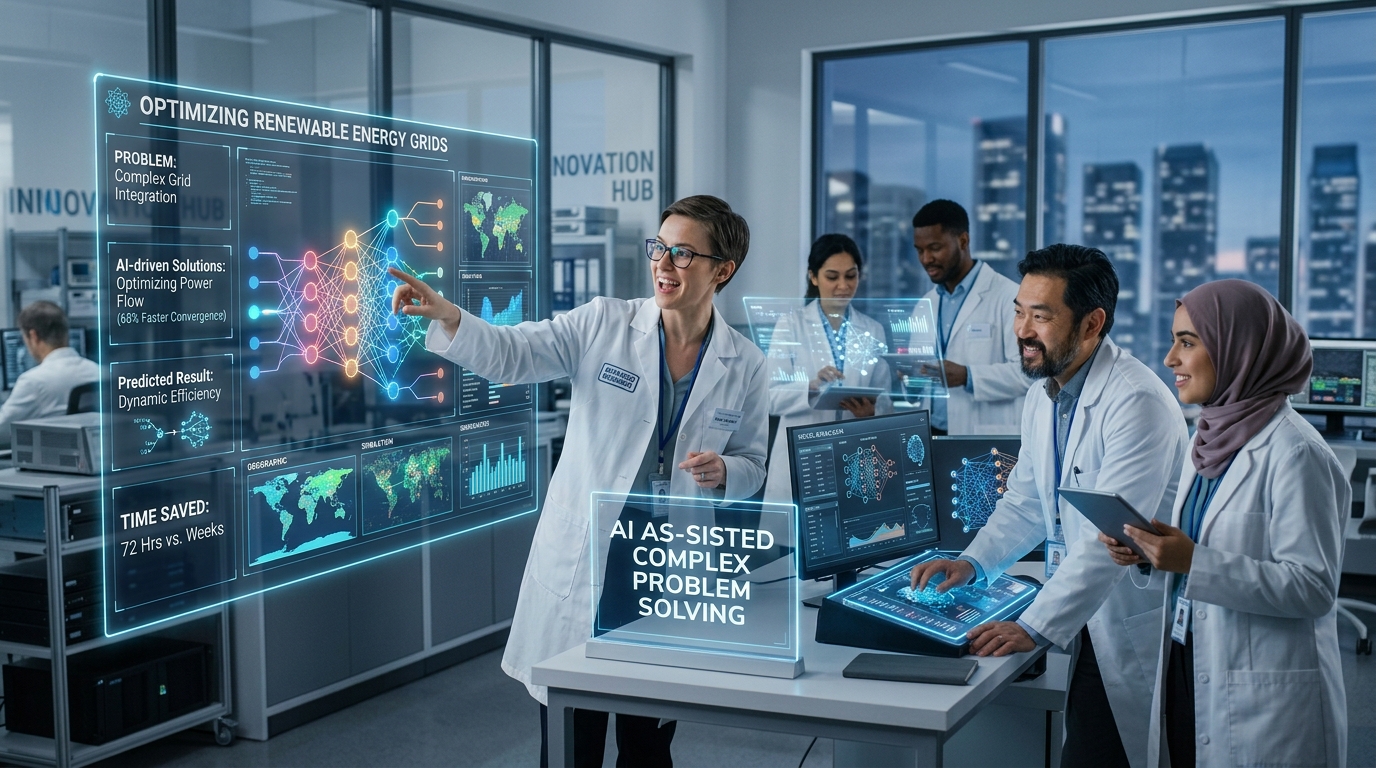
Artificial Intelligence (AI) has become one of the most powerful technologies of the modern era, helping humans solve complex problems faster and more accurately than ever before. From healthcare and education to business and science, AI systems can analyze huge amounts of data in seconds and provide smart solutions. This reduces human effort, saves time, and improves decision-making in daily life. As AI continues to evolve, it is transforming industries and making problem-solving more efficient, intelligent, and reliable across the world.
AI In Healthcare Solutions
Disease Diagnosis
AI helps doctors diagnose diseases quickly by analyzing medical reports, scans, and patient symptoms. It detects patterns that humans may miss. This improves accuracy, reduces delays, and supports early treatment, which increases survival rates and enhances healthcare efficiency in hospitals and clinics worldwide effectively.
Medical Imaging
AI improves medical imaging by analyzing X-rays, MRIs, and CT scans with high precision. It highlights abnormalities and supports radiologists in identifying issues faster. This technology reduces human error, speeds up diagnosis, and improves the overall quality of medical treatment in healthcare systems globally.
Drug Discovery
AI accelerates drug discovery by analyzing chemical data and predicting how medicines will work. This reduces research time and cost significantly. Scientists can develop new treatments faster for diseases, improving healthcare innovation and helping save millions of lives across the world.
Patient Monitoring
AI-based systems continuously monitor patient health using wearable devices and smart sensors. They track heart rate, oxygen levels, and other vital signs. This allows doctors to respond quickly to emergencies and provide better personalized care for patients in real time situations.
Personalized Treatment
AI helps create personalized treatment plans based on patient history and genetic data. This ensures more effective medical care tailored to individual needs. It improves recovery rates and reduces side effects by recommending the most suitable medicines and therapies for each patient.
AI In Education Systems
Smart Learning Platforms
AI-powered learning platforms provide personalized education by analyzing student performance. They suggest lessons based on strengths and weaknesses. This helps students learn faster, improve understanding, and achieve better academic results through customized study plans and interactive digital tools effectively.
Automated Grading
AI systems automatically evaluate assignments, quizzes, and exams. This saves teachers time and ensures fair grading. It reduces human bias and provides instant feedback to students, helping them understand mistakes and improve their performance more efficiently in educational environments.
Virtual Tutors
AI virtual tutors assist students by answering questions and explaining complex topics. They are available anytime, making learning flexible and accessible. These systems help students study at their own pace and improve understanding in subjects like math, science, and languages.
Language Learning
AI improves language learning by offering real time translation, pronunciation correction, and practice exercises. Students can learn new languages more easily and confidently. This enhances communication skills and supports global education opportunities for learners around the world effectively and efficiently.
Educational Content Creation
AI helps create educational content such as quizzes, notes, and videos automatically. Teachers can save time and focus more on teaching. This improves the quality of education and makes learning materials more engaging, structured, and easy to understand for students.
AI In Business And Industry
Data Analysis
AI analyzes large business datasets to identify trends and patterns. Companies use this information for better decision-making. It improves efficiency, reduces risks, and helps businesses understand customer behavior and market demands more accurately in competitive industries worldwide.
Customer Support
AI chatbots provide instant customer support by answering questions and solving problems. They operate 24/7 without human involvement. This improves customer satisfaction, reduces waiting time, and helps businesses handle large volumes of customer queries efficiently and effectively.
Process Automation
AI automates repetitive business tasks such as data entry, scheduling, and inventory management. This saves time and reduces operational costs. Employees can focus on more important work, improving productivity and efficiency across various industries and organizations globally.
Fraud Detection
AI detects fraud in financial systems by analyzing unusual transactions and patterns. It helps banks and companies prevent scams and protect customer data. This increases security and builds trust in digital financial systems and online transactions worldwide.
Supply Chain Management
AI improves supply chain management by predicting demand and optimizing delivery routes. It reduces delays and lowers costs for businesses. This ensures smooth operations, better inventory control, and faster product delivery to customers in global markets.
AI In Daily Life Applications
Smart Assistants
AI smart assistants like voice-controlled devices help people perform daily tasks such as setting reminders, playing music, and searching information. They make life more convenient by providing quick responses and automating simple activities in homes and workplaces.
Navigation Systems
AI-powered navigation systems analyze traffic conditions and suggest the fastest routes. This helps drivers save time, reduce fuel consumption, and avoid congestion. It improves travel efficiency and makes transportation easier for people in busy cities and regions.
Recommendation Systems
AI recommends movies, products, and music based on user preferences. Platforms like streaming services use this technology to enhance user experience. It saves time and helps people discover content that matches their interests and personal tastes effectively.
Smart Homes
AI enables smart home devices to control lighting, temperature, and security systems automatically. This increases comfort, energy efficiency, and safety for homeowners. It allows users to manage their homes remotely using smartphones and voice commands easily.
Personal Finance Management
AI helps individuals manage finances by tracking expenses, suggesting savings plans, and analyzing spending habits. This improves financial planning and helps users make better decisions about budgeting, saving, and investing money wisely in daily life.
AI In Scientific Research
Climate Modeling
AI analyzes environmental data to predict climate changes and natural disasters. This helps scientists understand global warming patterns and develop preventive measures. It supports environmental protection and improves planning for climate-related challenges worldwide effectively.
Space Exploration
AI assists space agencies in analyzing data from satellites and space missions. It helps identify planets, stars, and cosmic patterns. This improves research accuracy and supports discoveries in astronomy and space science significantly.
Physics Simulations
AI creates simulations for complex physics problems that are difficult to solve manually. Scientists use these models to test theories and experiments virtually. This speeds up research and improves understanding of scientific concepts.
Genetic Research
AI analyzes genetic data to understand diseases and human DNA structure. It helps in developing treatments for genetic disorders. This improves medical research and supports advancements in biotechnology and healthcare innovation globally.
Engineering Design
AI helps engineers design structures, machines, and systems more efficiently. It tests different models and predicts performance outcomes. This reduces errors, saves time, and improves the quality of engineering projects in various industries.
AI In Communication And Security
Language Translation
AI translation tools convert languages instantly, improving communication between people worldwide. This helps businesses, travelers, and students communicate easily. It breaks language barriers and supports global connectivity in personal and professional interactions effectively.
Cybersecurity Protection
AI detects cyber threats and protects systems from hacking attempts. It monitors suspicious activity and secures sensitive data. This improves digital safety for individuals, companies, and governments in the modern internet driven world.
Social Media Monitoring
AI analyzes social media content to detect trends, fake news, and harmful posts. This helps platforms maintain safe environments. It improves content moderation and ensures better user experience across digital communication platforms globally.
Emergency Response Systems
AI helps emergency services respond faster by analyzing situations and locating incidents quickly. It improves rescue operations during disasters and accidents. This saves lives and enhances efficiency in critical emergency management systems worldwide.
Digital Identity Verification
AI verifies user identities through facial recognition and biometric systems. This improves security in banking, travel, and online services. It reduces fraud and ensures safer digital interactions in modern technology systems globally.
AI In Future Innovation
Autonomous Vehicles
AI powers self-driving cars that navigate roads without human input. These vehicles improve safety, reduce accidents, and enhance transportation efficiency. They represent the future of smart mobility and advanced transportation systems worldwide.
Robotics Development
AI-driven robots perform complex tasks in industries, healthcare, and households. They improve productivity, reduce human effort, and handle dangerous jobs safely. Robotics will continue transforming industries with advanced automation technologies in the future.
Smart Cities
AI helps develop smart cities by managing traffic, energy, and public services efficiently. It improves urban living conditions and reduces environmental impact. This creates sustainable and technologically advanced cities for future generations.
Predictive Analytics
AI predicts future outcomes based on data analysis. Businesses and governments use it for planning and decision-making. It improves accuracy, reduces risks, and supports better strategies in various sectors of society.
Human AI Collaboration
Future AI systems will work closely with humans to solve complex global problems. This collaboration will improve creativity, productivity, and innovation across industries. It will shape a smarter and more efficient world.
How does AI help in healthcare?
AI helps in healthcare by diagnosing diseases, analyzing scans, monitoring patients, and supporting personalized treatments.
Why is AI important in education?
AI is important in education because it provides personalized learning, automated grading, and virtual tutoring support.
How does AI improve business operations?
AI improves business operations through data analysis, automation, fraud detection, and customer support systems.
Can AI be used in daily life?
Yes, AI is used in daily life through smart assistants, navigation systems, recommendation apps, and smart homes.
What is the future of AI technology?
The future of AI includes autonomous vehicles, smart cities, robotics, predictive analytics, and human AI collaboration.
AI has transformed the way humans solve complex problems by making processes faster, smarter, and more accurate. It is improving healthcare, education, business, communication, and scientific research every day. As technology continues to advance, AI will play an even bigger role in shaping the future, helping humanity solve global challenges with greater efficiency and innovation worldwide.
