


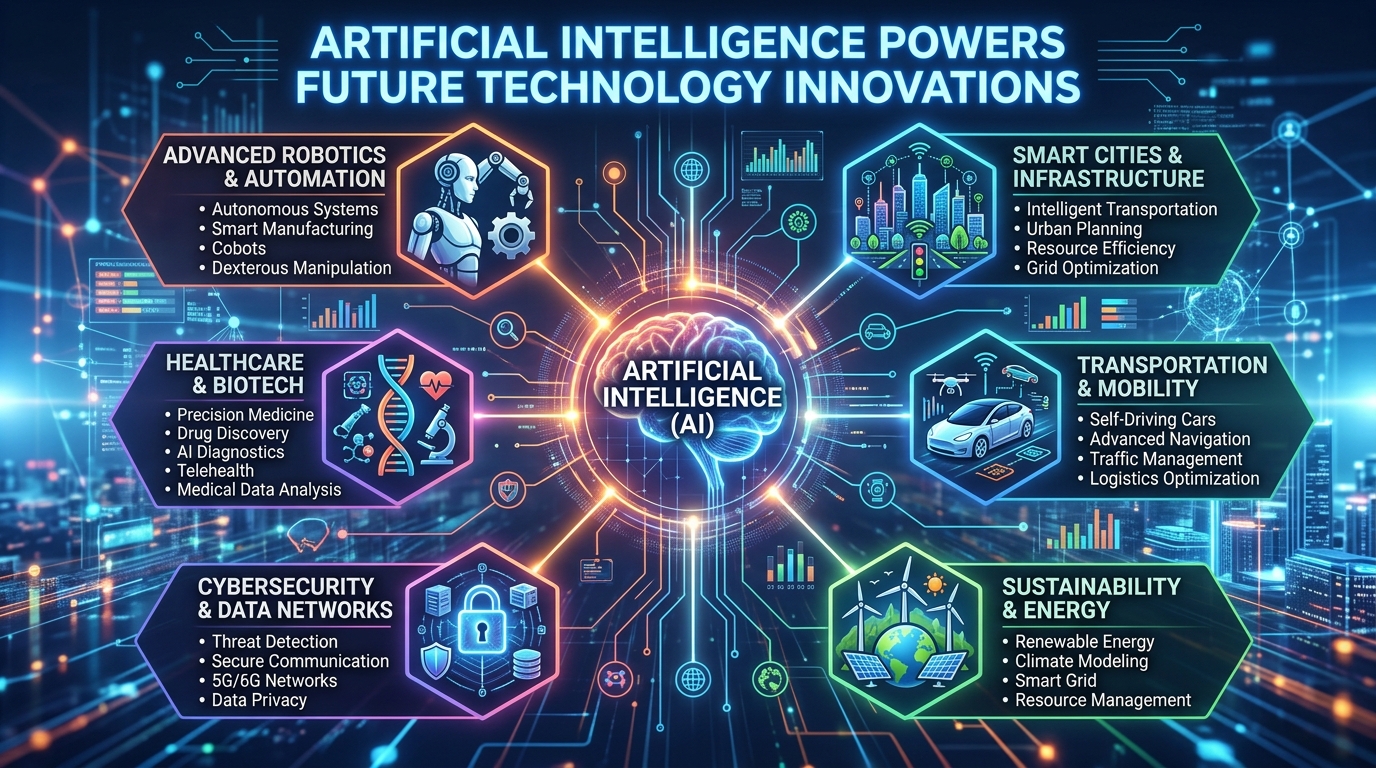
Artificial intelligence is rapidly transforming the modern world by driving powerful innovations across industries such as healthcare, education, business, transportation, and communication. It enables machines to learn, analyze data, and make intelligent decisions with minimal human input. As AI continues to evolve, it is reshaping how technology is designed, developed, and applied, creating smarter systems and more efficient solutions for the future.
AI In Modern Industries
Healthcare Transformation
Artificial intelligence is revolutionizing healthcare by improving diagnosis accuracy, predicting diseases early, and assisting doctors in treatment planning. AI systems analyze medical data quickly, helping professionals make better decisions. This leads to faster recovery, reduced errors, and improved patient care across hospitals and healthcare centers globally.
Financial Sector Automation
AI is widely used in financial systems to detect fraud, analyze market trends, and automate banking operations. It helps institutions make data driven decisions and reduce financial risks. This improves efficiency, enhances security, and increases profitability for banks, insurance companies, and investment organizations worldwide today.
Manufacturing Efficiency Growth
In manufacturing, artificial intelligence improves production speed, reduces errors, and enhances quality control. Smart machines and robotics perform repetitive tasks with high accuracy. This reduces operational costs, increases productivity, and ensures consistent product quality, making industries more competitive in global markets and supply chains.
Retail Personalization Systems
AI helps retail businesses analyze customer behavior and preferences to offer personalized shopping experiences. It recommends products based on browsing history and purchase patterns. This increases customer satisfaction, improves sales performance, and strengthens brand loyalty in highly competitive retail markets across digital platforms today.
Transportation Automation Development
Artificial intelligence is transforming transportation through self driving vehicles, traffic management systems, and route optimization tools. These innovations improve safety, reduce travel time, and enhance fuel efficiency. AI powered transportation systems are shaping the future of smart cities and modern mobility solutions globally today.
Machine Learning Advancements
Data Pattern Recognition
Machine learning enables systems to identify patterns in large datasets quickly and accurately. This helps businesses predict trends, understand customer behavior, and improve decision making. Pattern recognition is essential for innovation in sectors like marketing, healthcare, and cybersecurity across global industries today.
Predictive Analysis Systems
Predictive analysis uses machine learning algorithms to forecast future outcomes based on historical data. Businesses use it to predict sales, customer demand, and market changes. This improves planning, reduces uncertainty, and supports smarter strategies for long term growth and success in competitive environments.
Automated Decision Making
Machine learning allows systems to make decisions automatically without human intervention. These systems analyze data and select the best possible outcomes. This improves efficiency, reduces errors, and saves time in industries such as finance, healthcare, and logistics where fast decisions are essential.
Continuous Learning Models
Machine learning models continuously improve by learning from new data over time. This allows systems to become more accurate and efficient. Continuous learning enhances performance in applications like speech recognition, recommendation systems, and autonomous technologies used across modern digital platforms globally today.
Smart Recommendation Engines
Recommendation engines powered by machine learning suggest products, content, and services based on user behavior. These systems improve user experience and increase engagement. They are widely used in streaming platforms, e commerce websites, and social media applications to deliver personalized content effectively.
| AI Application | Key Benefit |
|---|---|
| Predictive Analysis | Better forecasting |
| Recommendation Systems | Personalized experience |
| Automation Tools | Time saving |
| Pattern Recognition | Accurate insights |
AI In Communication Systems
Natural Language Processing
Natural language processing allows machines to understand, interpret, and respond to human language effectively. It is used in chatbots, translation tools, and voice assistants. This technology improves communication efficiency and enables smoother interaction between humans and machines in digital environments worldwide today.
Voice Recognition Technology
Voice recognition systems convert spoken language into text and commands. This technology is used in smartphones, virtual assistants, and smart devices. It improves accessibility, speeds up communication, and enhances user convenience by enabling hands free interaction with digital systems and applications.
Smart Chatbots Development
AI powered chatbots provide instant responses to customer queries on websites and applications. They improve customer service efficiency by handling multiple requests simultaneously. This reduces workload for human agents and ensures faster, more reliable communication between businesses and customers in real time.
Language Translation Tools
AI translation tools help break language barriers by converting text and speech between different languages. This improves global communication and supports international collaboration. These tools are widely used in education, business, and travel industries to enhance understanding and connectivity across cultures.
Sentiment Analysis Systems
Sentiment analysis uses AI to understand emotions behind text or speech. It helps businesses analyze customer feedback and public opinion. This improves decision making, enhances marketing strategies, and supports better customer engagement through deeper understanding of user emotions and preferences.
Robotics And Automation
Industrial Robotics Growth
Industrial robots perform complex tasks such as welding, assembling, and packaging with high precision. They increase production speed and reduce human error. This improves efficiency in manufacturing industries and supports large scale production systems across global markets today.
Autonomous Systems Development
Autonomous systems operate independently without human control using AI technologies. These systems are used in drones, vehicles, and smart machines. They improve safety, efficiency, and productivity in various industries including transportation, agriculture, and defense sectors worldwide.
Smart Home Automation
Smart home systems use AI to control lighting, security, and appliances automatically. These systems improve comfort, energy efficiency, and convenience for users. Home automation is becoming increasingly popular as part of modern smart living environments globally today.
Workplace Automation Tools
AI powered automation tools help businesses manage repetitive tasks such as scheduling, data entry, and reporting. This reduces workload and increases productivity. Employees can focus on creative and strategic tasks, improving overall business performance and operational efficiency.
Robotic Process Automation
Robotic process automation uses software robots to handle repetitive digital tasks. It improves accuracy, reduces costs, and saves time in business operations. This technology is widely used in finance, healthcare, and customer service industries for efficient workflow management.
AI In Education Systems
Personalized Learning Platforms
AI creates personalized learning experiences by adapting content according to student performance and learning speed. This helps students understand concepts better and improves academic results. It supports individualized education systems in schools, colleges, and online learning platforms globally.
Intelligent Tutoring Systems
AI powered tutoring systems provide students with real time guidance and explanations. These systems help learners solve problems and understand difficult topics. They improve learning efficiency and offer support similar to human tutors in digital education environments.
Automated Grading Systems
Automated grading tools evaluate assignments and exams quickly and accurately. This saves time for teachers and ensures fair assessment. It improves efficiency in educational institutions and allows educators to focus more on teaching and student development activities.
Virtual Classroom Enhancement
AI enhances virtual classrooms by improving interaction, monitoring student performance, and providing real time feedback. It makes online learning more engaging and effective. This supports distance education and helps students learn from anywhere in the world conveniently.
Skill Based Learning Tools
AI tools focus on developing practical skills by offering interactive exercises and simulations. These tools help students gain real world experience and improve employability. They support modern education systems by aligning learning with industry requirements and future job markets.
AI In Cybersecurity
Threat Detection Systems
AI powered systems detect cyber threats by analyzing network activity and identifying unusual behavior patterns. This helps prevent attacks before they cause damage. It improves digital security and protects sensitive information in organizations and online platforms worldwide today.
Fraud Prevention Tools
AI helps detect and prevent financial fraud by monitoring transactions and identifying suspicious activities. It increases security in banking and online payments. This reduces financial losses and builds trust between customers and digital financial service providers globally.
Data Protection Systems
AI enhances data protection by encrypting sensitive information and monitoring unauthorized access attempts. It ensures privacy and security for users and organizations. This is essential in protecting personal, financial, and business data in the digital age.
Risk Assessment Models
AI based risk assessment models evaluate potential cybersecurity threats and vulnerabilities. These systems help organizations prepare for attacks and strengthen defenses. This improves overall security planning and reduces the impact of cyber incidents on digital infrastructure.
Automated Security Responses
AI systems provide automatic responses to cyber threats by blocking attacks and isolating affected systems. This reduces response time and minimizes damage. It improves cybersecurity efficiency and ensures continuous protection of digital environments and networks.
Future Of Artificial Intelligence
Advanced AI Systems
Future AI systems will become more intelligent, capable of solving complex problems and making independent decisions. These advancements will transform industries and improve efficiency. AI will play a central role in shaping future technologies and global innovation trends.
Human AI Collaboration
Human AI collaboration will increase productivity by combining human creativity with machine intelligence. This partnership will improve decision making and innovation. It will create new opportunities in industries such as healthcare, education, and business development worldwide.
Ethical AI Development
Ethical AI development focuses on creating systems that are fair, transparent, and safe. It ensures responsible use of artificial intelligence. This is important for building trust and preventing misuse of advanced technologies in society and industries.
Smart City Integration
AI will play a key role in developing smart cities by improving traffic systems, energy management, and public services. These innovations will enhance urban living, reduce environmental impact, and improve quality of life for citizens globally.
Future Job Transformation
Artificial intelligence will transform job markets by creating new roles and changing existing ones. While some jobs may be automated, new opportunities will emerge in technology and innovation sectors. This will reshape the global workforce significantly.
FAQs
How does AI improve modern technology?
AI improves modern technology by automating tasks, analyzing data, and enhancing decision making.
Which industries benefit most from AI?
Healthcare, finance, manufacturing, education, and transportation benefit significantly from AI innovations.
Will AI replace human jobs completely?
No, AI will transform jobs but also create new opportunities in advanced sectors.
How is AI used in daily life?
AI is used in smartphones, online recommendations, virtual assistants, and smart devices.
What is the future of artificial intelligence?
The future of AI includes smarter systems, human collaboration, and advanced automation technologies.
Conclusion
Artificial intelligence is driving the future of technological innovation by transforming industries, improving efficiency, and enabling smarter decision making across all sectors. From healthcare and education to cybersecurity and transportation, AI continues to reshape modern life. As advancements continue, artificial intelligence will play an even greater role in building intelligent systems, improving human experiences, and creating a more connected and innovative world.
