


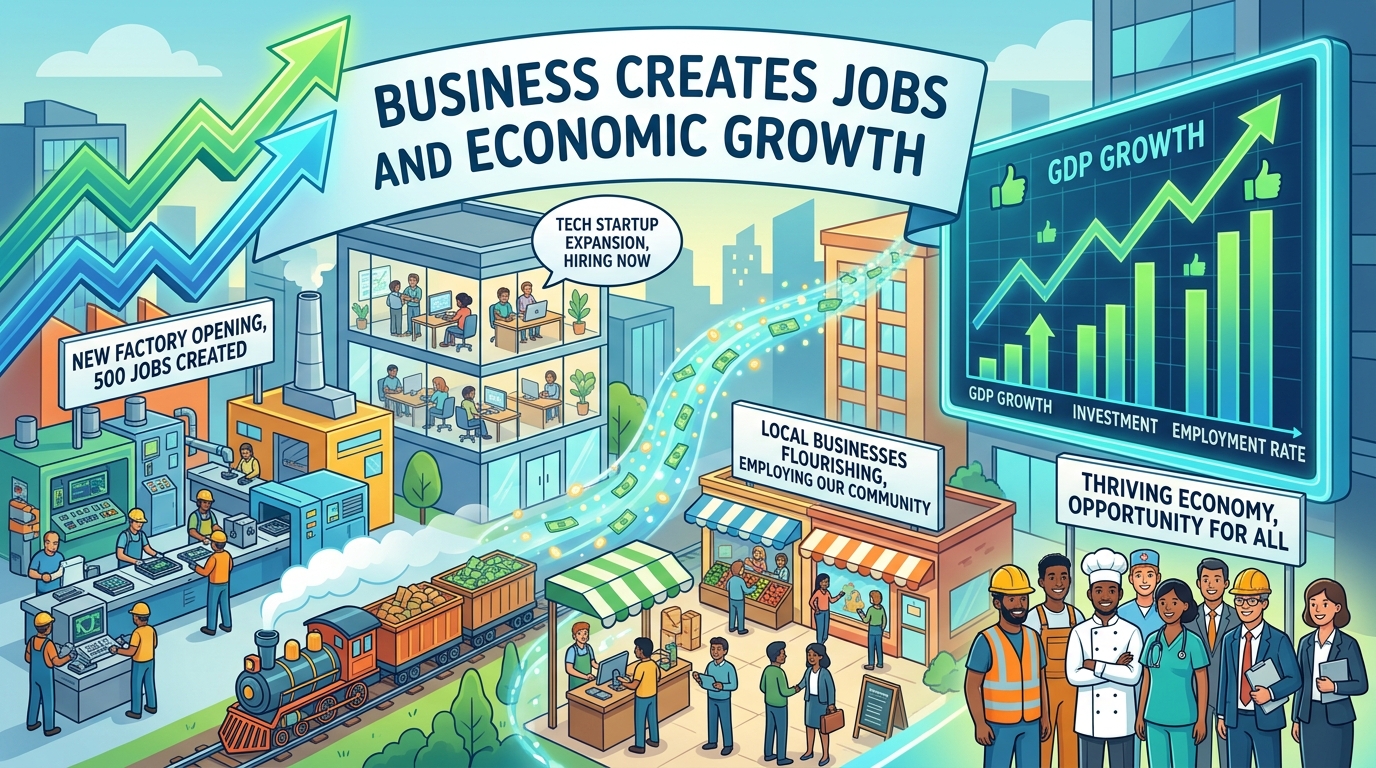
Business plays a central role in shaping modern society by creating employment opportunities and driving economic growth in both developed and developing countries. When businesses start, expand, or invest in new sectors, they generate jobs for skilled and unskilled workers, improve income levels, and increase production of goods and services. This cycle strengthens the economy, boosts living standards, and supports national development. In today’s competitive world, businesses are also powered by technology, innovation, and global trade, making them essential for sustainable progress and financial stability.
Role Of Business In Employment
Job Creation
Businesses create jobs by hiring people for different roles such as management, marketing, production, and customer service. As companies grow, they need more employees to handle operations. This reduces unemployment, increases household income, and improves overall living standards for individuals and families across society.
Skill Development
Working in businesses helps individuals develop professional skills such as communication, teamwork, problem solving, and technical knowledge. Employees gain experience through training and daily tasks. These skills improve career growth opportunities and prepare workers for better positions in competitive job markets and modern industries.
Youth Opportunities
Businesses provide opportunities for young people entering the job market for the first time. Internships, entry level jobs, and training programs help students gain practical experience. This support allows youth to build careers, become financially independent, and contribute positively to economic development in their countries.
Entrepreneurship Growth
Business environments encourage entrepreneurship by supporting startups and small enterprises. New business owners create jobs not only for themselves but also for others. This growth increases innovation, strengthens competition, and helps develop stronger economic systems that benefit society through improved products and services.
Rural Employment
Businesses in agriculture, manufacturing, and local industries create jobs in rural areas. This reduces migration to cities and supports balanced regional development. Rural employment improves income distribution, reduces poverty, and helps communities grow economically while maintaining stability in less developed regions.
Business Contribution To Economy
GDP Growth
Businesses contribute to Gross Domestic Product by producing goods and services that increase national income. Higher production leads to stronger economies and improved financial stability. This growth helps governments invest in infrastructure, education, and healthcare, benefiting the entire population effectively over time.
Tax Revenue
Businesses pay taxes to governments, which become a major source of public revenue. This money is used for building roads, schools, hospitals, and public services. Tax contributions from businesses support national development and improve the quality of life for citizens in many ways.
Export Earnings
Businesses involved in international trade generate export earnings by selling products to foreign markets. This brings foreign currency into the country and strengthens the economy. Export activities also improve global relationships and increase demand for locally produced goods and services worldwide.
Investment Attraction
Successful businesses attract both local and foreign investment. Investors are encouraged by profitable industries and stable markets. This investment helps expand production, create more jobs, and improve economic infrastructure, leading to long term growth and development in various sectors of the economy.
Industrial Development
Businesses promote industrial development by establishing factories, production units, and service centers. This increases manufacturing output and supports technological advancement. Industrial growth strengthens supply chains, improves efficiency, and creates a foundation for sustainable economic progress in modern societies.
Types Of Businesses
Small Businesses
Small businesses operate on a limited scale and include shops, local services, and family owned enterprises. They create employment in communities and support daily needs of people. These businesses are important for local economies and contribute to income generation at grassroots level.
Medium Enterprises
Medium enterprises operate with larger resources and employee strength compared to small businesses. They serve regional markets and often expand over time. These businesses help bridge the gap between small and large industries while contributing significantly to economic development and job creation.
Large Corporations
Large corporations operate at national and international levels with high production capacity and extensive workforce. They influence global markets and generate significant revenue. These companies create thousands of jobs and play a major role in shaping economic growth and industrial advancement worldwide.
Online Businesses
Online businesses operate through digital platforms and e commerce systems. They sell products and services over the internet, reaching global customers easily. These businesses reduce operational costs, increase convenience, and create new job opportunities in technology, marketing, and logistics sectors.
Service Businesses
Service businesses provide intangible services such as education, healthcare, transportation, and hospitality. They focus on customer satisfaction and experience. These businesses are essential for daily life and contribute significantly to employment and economic stability in both urban and rural areas.
Impact Of Business On Society
Improved Living Standards
Businesses improve living standards by increasing income opportunities and providing better products and services. People gain access to modern facilities, improved healthcare, and quality education. This enhances overall lifestyle and supports social development in growing economies around the world.
Urban Development
Business activities contribute to urban development by building infrastructure such as offices, factories, and commercial centers. Cities grow rapidly due to business expansion. This development improves transportation, housing, and public services, making urban areas more modern and economically active.
Poverty Reduction
Businesses help reduce poverty by creating jobs and income sources for people from different backgrounds. Employment opportunities allow families to meet basic needs and improve their quality of life. Economic growth generated by businesses supports long term poverty alleviation efforts.
Innovation Growth
Businesses encourage innovation by investing in new technologies, products, and services. Competition motivates companies to improve efficiency and quality. This leads to technological advancement, better customer solutions, and continuous improvement in various industries, benefiting society as a whole.
Community Development
Businesses support community development through corporate social responsibility activities such as education programs, healthcare support, and infrastructure projects. These initiatives improve social welfare and strengthen relationships between companies and local communities, creating a more balanced and supportive environment.
Challenges Faced By Businesses
Market Competition
Businesses face strong competition from other companies offering similar products or services. This pressure forces them to improve quality, reduce prices, and innovate constantly. Competition can be challenging but also encourages growth and better performance in the long run.
Financial Risks
Businesses face financial risks due to uncertain market conditions, investment losses, and operational costs. Poor financial management can lead to failure. Proper planning, budgeting, and risk management are essential for maintaining stability and ensuring long term business success.
Technological Changes
Rapid technological changes require businesses to continuously adapt and upgrade systems. Companies that fail to adopt new technology may lose competitiveness. Staying updated with digital tools and innovations is necessary for efficiency and market survival in modern industries.
Workforce Management
Managing employees effectively is a major challenge for businesses. Issues such as productivity, training, and employee satisfaction must be addressed carefully. Strong leadership and human resource strategies are important for maintaining a motivated and skilled workforce.
Global Market Uncertainty
Businesses operating internationally face uncertainty due to changing economic conditions, trade policies, and political situations. These factors affect demand, pricing, and supply chains. Companies must remain flexible and prepared to handle global market fluctuations effectively.
Future Of Business Growth
Digital Transformation
Future businesses will rely heavily on digital technologies such as artificial intelligence, automation, and cloud computing. These tools will improve efficiency, reduce costs, and enhance customer experience, making businesses more competitive in global markets.
Remote Work Expansion
Remote work will continue to grow as businesses adopt flexible working models. Employees will work from different locations using digital tools. This approach increases productivity, reduces operational costs, and improves work life balance for employees.
Sustainable Business Practices
Businesses will focus more on sustainability by reducing environmental impact and using eco friendly resources. Green technologies and responsible production methods will become important for long term success and environmental protection globally.
Global Trade Growth
International trade will expand as businesses connect with global markets more easily through digital platforms. This will increase exports, improve economic relationships, and create more job opportunities across different countries and industries.
Artificial Intelligence Integration
Artificial intelligence will transform business operations by automating tasks, analyzing data, and improving decision making. Companies will use AI to increase productivity, enhance customer service, and stay competitive in rapidly changing markets.
How do businesses create jobs?
Businesses create jobs by hiring employees for production, services, marketing, management, and operational roles.
Why are businesses important for the economy?
Businesses increase GDP, generate tax revenue, support exports, and attract investment for economic growth.
What types of businesses exist?
Common types include small businesses, medium enterprises, large corporations, online businesses, and service businesses.
How do businesses improve society?
Businesses improve living standards, reduce poverty, support innovation, and contribute to community development.
What is the future of business growth?
Future business growth will focus on digital transformation, sustainability, remote work, and artificial intelligence.
Businesses are the backbone of economic growth because they create jobs, increase production, and generate income for individuals and governments. They support innovation, improve living standards, and strengthen national economies. With technological advancement and global connectivity, businesses will continue evolving, offering more opportunities for employment and development while shaping a stronger and more sustainable future worldwide.
