


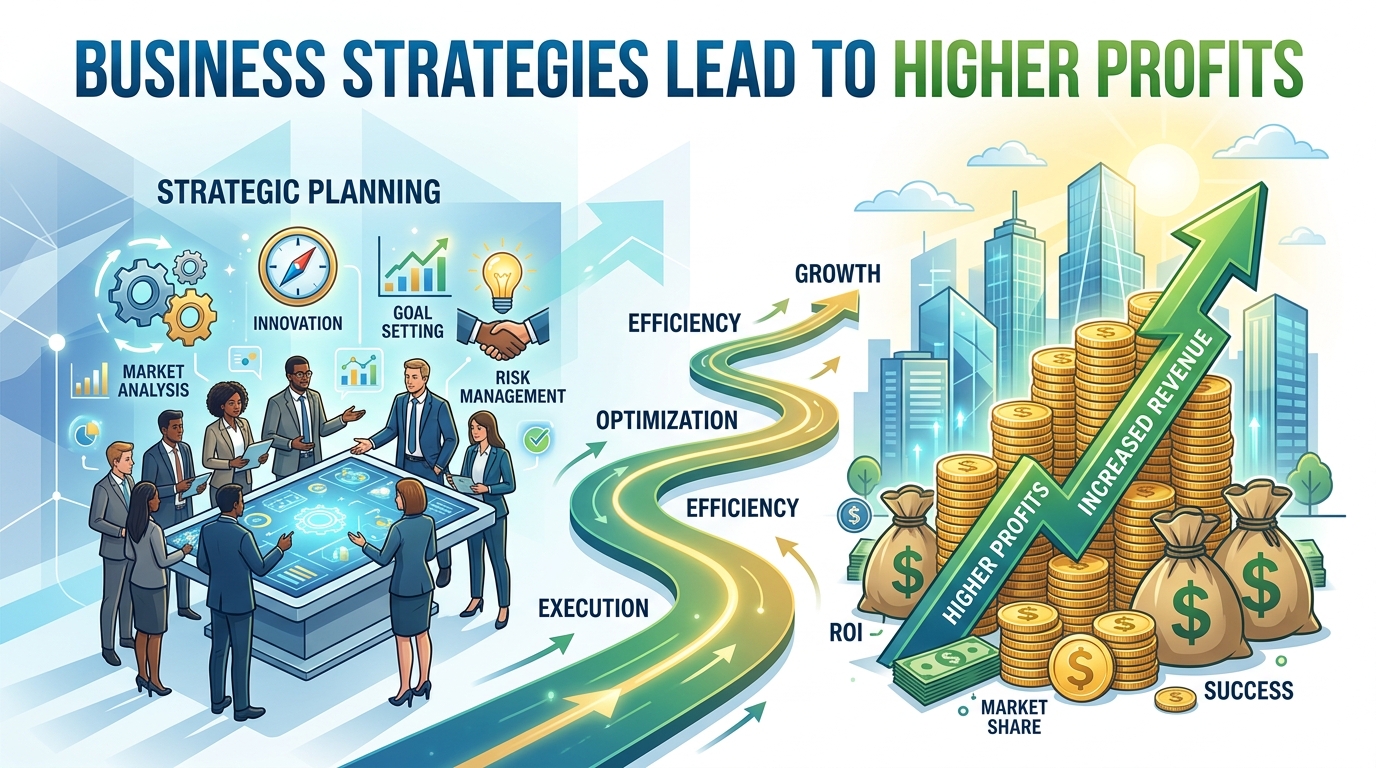
Strong business strategies play a central role in increasing profitability by guiding companies toward smarter decisions, efficient operations, and sustainable growth. In today’s competitive marketplace, organizations that plan carefully, analyze markets, and adapt quickly are more likely to achieve higher returns. Effective strategies help businesses reduce risks, attract customers, and maximize revenue while maintaining long term stability and success.
Strategic Planning In Business
Clear Business Objectives
Clear business objectives help organizations define what they want to achieve within a specific time frame. When goals are well structured, teams work with focus and direction. This reduces confusion, improves productivity, and ensures that every effort contributes toward increasing profitability and long term success in competitive markets.
Market Analysis Importance
Market analysis allows businesses to understand customer needs, competitor behavior, and industry trends. By studying this data, companies make informed decisions about products and services. This reduces uncertainty, improves targeting, and increases the chances of higher sales and stronger profit margins over time in evolving business environments.
Resource Allocation Strategy
Effective resource allocation ensures that time, money, and workforce are used efficiently across business operations. Companies that manage resources wisely avoid waste and improve productivity. This strategic approach reduces unnecessary costs and supports higher profitability by ensuring that every asset contributes directly to business growth and performance.
Risk Management Planning
Risk management planning helps businesses identify potential threats before they become serious problems. Companies prepare strategies to handle financial, operational, and market risks effectively. This reduces losses, protects investments, and ensures stable growth, which ultimately contributes to consistent profit generation and long term business sustainability.
Long Term Vision Setting
Long term vision setting provides direction for future business development and expansion. Organizations with a clear vision stay focused on growth opportunities and innovation. This strategic mindset improves decision making, strengthens brand value, and supports continuous profit growth by aligning daily operations with future goals.
Marketing Strategies For Growth
Digital Marketing Expansion
Digital marketing expansion helps businesses reach wider audiences through online platforms such as social media, search engines, and websites. This increases brand visibility and customer engagement. As a result, companies generate more leads and sales, directly contributing to higher revenue and improved profitability in competitive markets.
Customer Targeting Techniques
Customer targeting techniques allow businesses to focus on specific groups based on age, interests, and behavior. This improves marketing efficiency and reduces unnecessary spending. By reaching the right audience, companies increase conversion rates and boost profits through more effective and personalized marketing campaigns that drive better results.
Brand Awareness Campaigns
Brand awareness campaigns help businesses build recognition and trust among potential customers. When people are familiar with a brand, they are more likely to purchase its products or services. This increased visibility strengthens market position and leads to higher sales and long term profitability.
Social Media Engagement
Social media engagement allows businesses to interact directly with customers through posts, comments, and messages. This builds strong relationships and improves customer loyalty. Engaged audiences are more likely to purchase products, recommend services, and contribute to increased revenue and sustainable business growth over time.
Content Marketing Value
Content marketing provides valuable information to customers through blogs, videos, and articles. This builds trust and positions the business as an industry expert. High quality content attracts more traffic, improves customer interest, and ultimately leads to increased conversions and higher profitability for the organization.
| Strategy Type | Profit Impact |
|---|---|
| Digital Marketing | High customer reach |
| Brand Awareness | Increased trust |
| Content Marketing | Better conversions |
| Social Media | Strong engagement |
Financial Management Techniques
Cost Reduction Methods
Cost reduction methods help businesses minimize unnecessary expenses while maintaining quality. By identifying inefficient processes, companies can save money and improve operational efficiency. Reduced costs directly increase profit margins, allowing businesses to invest more in growth and innovation strategies for long term success.
Revenue Optimization Planning
Revenue optimization planning focuses on increasing income through better pricing, improved sales strategies, and product diversification. Businesses analyze customer behavior to maximize earnings. This approach ensures steady income growth and helps companies achieve higher profitability by making the most of available market opportunities effectively.
Budget Control Systems
Budget control systems ensure that businesses manage their finances within planned limits. Regular monitoring of income and expenses prevents overspending. This financial discipline helps maintain stability, reduces financial risks, and supports consistent profit generation by ensuring efficient use of company resources.
Investment Decision Strategy
Investment decision strategy involves selecting the most profitable opportunities for business expansion. Companies evaluate risks and returns before investing in new projects. Smart investment choices lead to higher returns, improved business growth, and increased profitability over time in competitive economic environments.
Profit Margin Analysis
Profit margin analysis helps businesses understand how much profit they earn from sales after expenses. By analyzing margins, companies identify areas for improvement. This insight supports better pricing strategies, cost control, and ultimately increases overall profitability and financial performance.
Customer Relationship Management
Customer Loyalty Programs
Customer loyalty programs encourage repeat purchases by rewarding customers with discounts, points, or special offers. Loyal customers contribute to steady revenue growth. These programs strengthen relationships, improve retention, and significantly increase long term profitability for businesses in competitive markets.
Personalized Customer Experience
Personalized customer experience involves tailoring products and services according to individual preferences. This increases satisfaction and builds stronger emotional connections. Customers who feel valued are more likely to return, resulting in higher sales and improved business profitability over time.
Feedback Collection Systems
Feedback collection systems allow businesses to understand customer needs and expectations. By analyzing feedback, companies improve their products and services. This leads to better customer satisfaction, increased loyalty, and higher profits through improved reputation and stronger market relationships.
Customer Support Efficiency
Efficient customer support ensures quick resolution of issues and improves overall satisfaction. Happy customers are more likely to stay loyal and recommend the business. This reduces customer loss and increases revenue, contributing directly to long term profitability and brand strength.
Relationship Building Strategies
Relationship building strategies focus on creating trust and long term engagement with customers. Strong relationships encourage repeat business and positive word of mouth. This enhances brand reputation, increases customer retention, and supports continuous profit growth for businesses across industries.
Operational Efficiency Improvements
Process Optimization Techniques
Process optimization techniques help businesses streamline workflows and eliminate inefficiencies. Improved processes reduce time and resource waste. This increases productivity and lowers operational costs, directly contributing to higher profit margins and better overall business performance in competitive industries.
Technology Integration Systems
Technology integration systems improve business operations by automating tasks and enhancing communication. Digital tools increase efficiency, reduce errors, and save time. This allows businesses to focus on growth strategies, resulting in improved profitability and long term operational success.
Workforce Productivity Enhancement
Workforce productivity enhancement focuses on improving employee performance through training and motivation. Skilled employees complete tasks more efficiently and accurately. Higher productivity leads to increased output, reduced costs, and improved profitability for organizations in various business sectors.
Supply Chain Management
Supply chain management ensures smooth flow of goods from suppliers to customers. Efficient supply chains reduce delays and operational costs. This improves customer satisfaction, increases sales, and contributes significantly to higher business profitability and market competitiveness.
Performance Monitoring Systems
Performance monitoring systems track business activities and employee output in real time. These systems help identify weaknesses and improve efficiency. Better monitoring leads to informed decision making, reduced losses, and increased profitability through continuous performance improvement.
Innovation And Business Growth
Product Development Strategy
Product development strategy focuses on creating new or improved products to meet customer needs. Innovation attracts more customers and increases market demand. This leads to higher sales, stronger brand presence, and improved profitability in competitive business environments.
Research And Development Investment
Investment in research and development helps businesses discover new ideas and improve existing products. This innovation increases competitiveness and market share. Companies that invest in R&D often achieve higher profits through unique offerings and advanced solutions.
Competitive Advantage Building
Competitive advantage building allows businesses to stand out from rivals by offering better quality, pricing, or services. This attracts more customers and increases market share. A strong advantage directly contributes to higher revenue and long term profitability.
Business Expansion Strategies
Business expansion strategies involve entering new markets or increasing product lines. Expansion creates more revenue opportunities and strengthens brand presence. This growth approach significantly increases profitability by reaching larger customer bases and diversifying income sources effectively.
Innovation Culture Development
Innovation culture development encourages employees to share ideas and create new solutions. This supportive environment drives continuous improvement. Businesses that promote innovation achieve better performance, stronger growth, and increased profitability through creative and effective strategies.
FAQs
How do business strategies increase profits?
They improve planning, efficiency, and decision making, leading to higher revenue and lower costs.
Why is marketing important for profit growth?
Marketing attracts customers, increases sales, and strengthens brand visibility in competitive markets.
What role does customer management play in profits?
It improves loyalty, retention, and repeat purchases, which directly increases revenue.
How does technology improve business profitability?
It automates processes, reduces errors, and increases operational efficiency.
Why is innovation important for business success?
Innovation helps businesses stay competitive, attract customers, and increase long term profits.
Conclusion
Business strategies are essential for achieving higher profits because they guide planning, improve efficiency, and strengthen decision making across all operations. From marketing and finance to customer management and innovation, every strategy contributes to growth and stability. When businesses adapt to market changes and use effective planning, they maximize revenue, reduce risks, and ensure long term success in competitive environments.
